Tag: Bonobai

  • Mokslininkai nustebo: trijų primatų „kalba“ gali turėti gramatiką, laikytą tik žmogaus bruožu

    Mokslininkai nustebo: trijų primatų „kalba“ gali turėti gramatiką, laikytą tik žmogaus bruožu

    Kas iš tiesų rasta tyrime?

    Naujas Ciuricho universiteto mokslininkų darbas kelia klausimą, ar kai kurių primatų skleidžiami garsai gali turėti gramatines struktūras, primenančias žmogaus kalbą. Tyrėjai teigia aptikę požymių, kad tam tikros šauksmų sekos gali būti sudaromos ne vien linijiškai, bet ir su įterptomis, hierarchinėmis „lizdinėmis“ struktūromis.

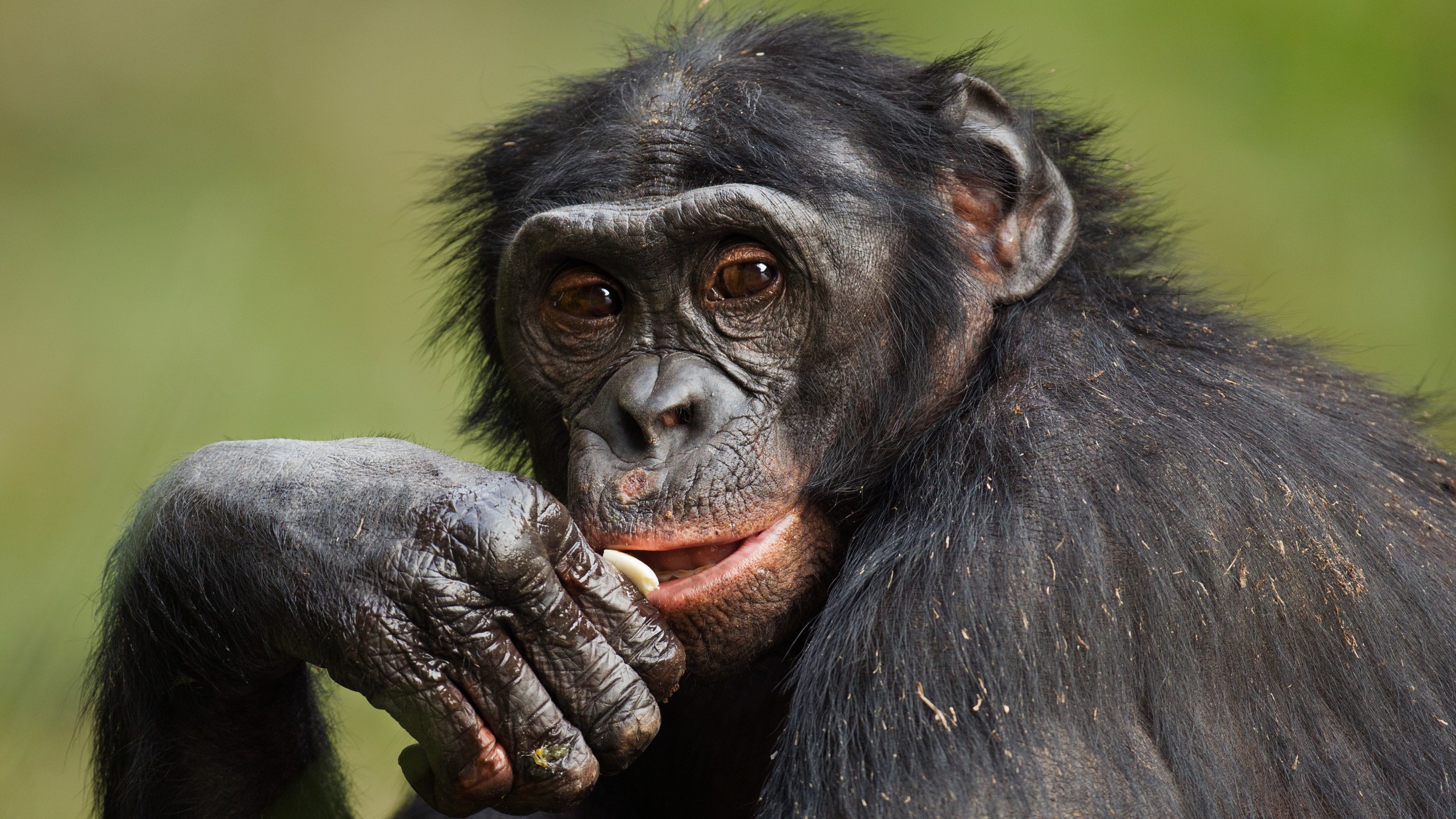
    Tyrime analizuoti trijų rūšių primatai: paprastieji marmozetai, alyvuoginiai kolobusai ir bonobai. Darbas publikuotas kaip bioRxiv išankstinis rankraštis, todėl šiuo metu jis dar nėra perėjęs recenzavimo.

    Kaip tai buvo tikrinama?

    Kadangi mokslininkai negali tiesiogiai patikrinti, ką tiksliai reiškia atskiri primatų garsai, jie pasirinko statistinį ir matematinį kelią. Buvo sukurti du modeliai, kurie bandė prognozuoti, koks garsas sekoje turėtų pasirodyti toliau, remiantis skirtingomis prielaidomis.

    Pirmasis modelis vertino šauksmus kaip linijinę grandinę, kur svarbiausia yra tik ankstesnių elementų tikimybės. Antrasis modelis leido įtraukti hierarchiją, kai sekoje svarbios ne tik kaimynystės, bet ir įterptos struktūros, panašiai kaip sakiniuose, kuriuose viena konstrukcija „įdedama“ į kitą.

    Metodą autoriai pirmiausia patikrino su žmonių kalbos įrašais, kad įsitikintų, jog modeliai atpažįsta skirtingas struktūras. Tuomet tie patys principai pritaikyti primatų vokalizacijoms, ir būtent čia, kaip teigiama, pasimatė hierarchinės struktūros požymiai.

    Kodėl tai svarbu ir kur ribos?

    Jei tokie rezultatai pasitvirtintų, tai reikštų, kad griežta riba tarp žmogaus sintaksės ir gyvūnų komunikacijos gali būti mažiau aiški, nei manyta. Autoriai kelia mintį, kad tai gali keisti diskusiją apie kalbos evoliuciją ir apie tai, kas buvo kritinis lūžis žmogaus raidoje.

    „Pirmą kartą parodome, kad gyvūnai generuoja šauksmų sekas, kurias galima aprašyti viršreguliariomis rekursinėmis gramatikomis, todėl panašumų su žmogaus kalba gali būti daugiau, nei manyta“, – teigia tyrimo autoriai.

    Vis dėlto patys mokslininkai pabrėžia, kad tai nėra galutinis įrodymas, jog primatai „naudoja gramatiką“ žmogui įprasta prasme. Modeliai remiasi tikimybėmis ir forma, o ne prasmės supratimu, todėl aptikta struktūra gali atspindėti ir kitus dėsningumus, pavyzdžiui, ritminius ar į muziką panašius šablonus.

    Ribojantis veiksnys – ir duomenų apimtis: tokie darbai dažnai remiasi palyginti nedideliais įrašų rinkiniais, o rezultatų patikimumui reikia platesnių duomenų iš skirtingų populiacijų ir aplinkų. Dėl to artimiausias žingsnis būtų didesni, nepriklausomai pakartojami tyrimai ir recenzavimas, kuris įvertintų metodikos tvirtumą.

    „Dar viena galimybė yra ta, kad šie grupavimai atspindi grynai formalią struktūrą, panašią į muzikos sintaksę žmonėms ar gyvūnų giesmes“, – pažymi autoriai.

    Tyrimas įsilieja į platesnę pastarųjų metų kryptį, kai gyvūnų komunikacija tiriama pasitelkiant pažangius statistinius metodus ir DI, leidžiančius tiksliau aptikti pasikartojančias sekas. Tačiau kol kas mokslininkų išvada atsargi: greičiausiai kai kuriuose primatų šauksmuose yra sudėtingesnė sandara, nei iki šiol pripažinta, bet galutiniai atsakymai dar priešakyje.
  • Chimpanzee call combinations hint at language roots: What a major Taï Forest study found

    New research based on years of field recordings suggests wild chimpanzees can combine calls in ways that shift or expand meaning, a trait long seen as central to human language. The findings challenge the idea that complex, rule-like vocal communication is uniquely human.

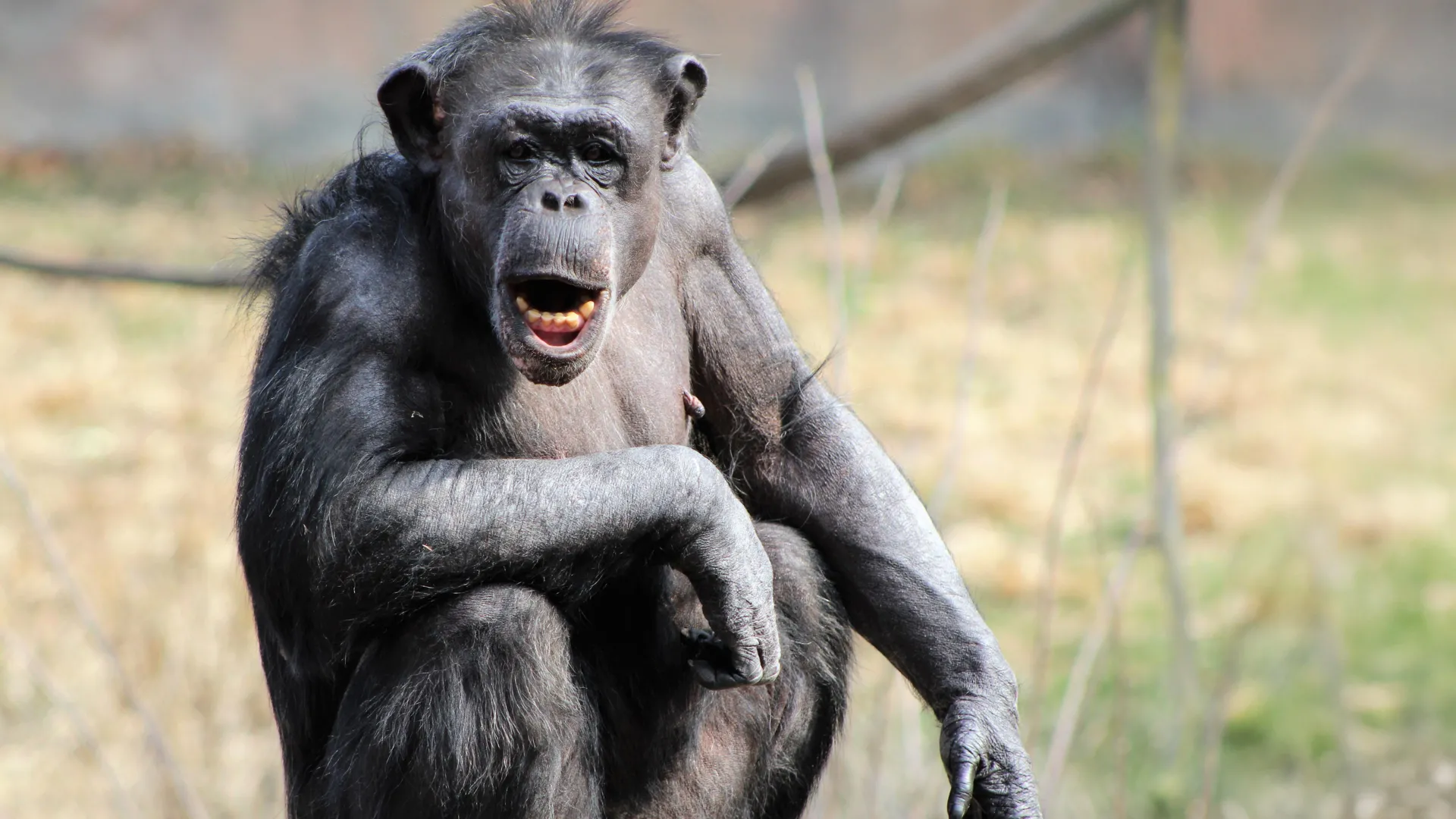
    Scientists studied thousands of vocalisations from three chimpanzee groups in Taï National Park in Côte d’Ivoire. They analysed how the meanings of 12 call types changed when paired into 16 different two-call combinations across many everyday situations.

    How chimpanzees change call meaning

    The researchers report four main patterns that alter meaning when calls are combined, including compositional pairings that add information. Other combinations appear to clarify context, helping narrow a call’s meaning depending on what follows.

    The study also describes non-compositional, idiom-like combinations, where two familiar calls together convey a meaning that is not a simple sum of the parts. That kind of structure resembles a key feature of human language, where fixed phrases can carry distinct meanings.

    Why the context matters

    Previous work on primate call combinations has often focused on narrow scenarios such as predator alerts, with only a small number of known combinations. In Taï, the team found a broader and more flexible set of pairings used across feeding, travelling, social bonding and other contexts.

    Because chimpanzees and bonobos are humans’ closest living relatives, the results feed into a larger debate about language evolution. The authors argue these combinatorial abilities may have deeper evolutionary roots than once assumed, though they also note more comparative research is needed.

    What this means for language origins

    The findings do not mean chimpanzees use human-like grammar, but they do suggest vocal communication can be more generative in great apes than previously documented. That could shift how scientists frame the early building blocks that eventually supported human language.

    Researchers also warn that long-term fieldwork is becoming harder as human pressures grow on wild chimpanzee populations. Continued observation in natural habitats, they argue, is essential to map the full range of great ape communication.

  • Study suggests a part of the human auditory cortex is uniquely tuned to chimpanzee calls

    Study suggests a part of the human auditory cortex is uniquely tuned to chimpanzee calls

    The human brain is not limited to recognizing our own voices. Research from the University of Geneva (UNIGE) has revealed that specific parts of the auditory cortex react strongly to chimpanzee vocalizations. Chimpanzees are our closest relatives both genetically and in the types of sounds they produce. The study, which appears in the journal eLife, indicates that certain subregions of the brain may be especially tuned to the calls of particular primate species. This insight offers a new way to explore how voice recognition emerged and how it may relate to the development of language.

    Human voices play a central role in social communication, and a significant portion of the auditory cortex is devoted to interpreting them. Researchers wanted to know whether these abilities have deeper evolutionary origins. To investigate this question, scientists from UNIGE’s Faculty of Psychology and Educational Sciences used a comparative approach grounded in species evolution. By examining how the human brain processes the vocalizations of closely related species, such as chimpanzees, bonobos and macaques, they aimed to identify traits shared with other primates. This approach helps shed light on how the neural foundations of vocal communication began to emerge long before language existed.

    Studying How the Brain Responds to Primate Calls

    In the experiment, 23 human volunteers listened to vocal sounds from four species. Human voices served as the control group. Chimpanzee calls were included because these primates are closely related to us both genetically and acoustically. Bonobo vocalizations were also tested, even though they often sound more like birdsong. Macaque calls were added because these primates are more distantly related to humans both evolutionarily and acoustically. Researchers used functional magnetic resonance imaging (fMRI) to examine activity across the auditory cortex. “Our intention was to verify whether a subregion sensitive specifically to primate vocalizations existed,” explains Leonardo Ceravolo, research associate at UNIGE’s Faculty of Psychology and Educational Sciences and first author of the study.

    A Distinct Neural Response to Chimpanzee Vocalizations

    The results confirmed their expectations. A part of the auditory cortex known as the superior temporal gyrus, which plays a key role in processing sounds related to language, music and emotional cues, showed increased activation when participants heard certain primate calls. “When participants heard chimpanzee vocalizations, this response was clearly distinct from that triggered by bonobos or macaques.”

    This pattern is particularly striking because bonobos are just as genetically close to humans as chimpanzees, yet their vocalizations differ greatly in acoustic structure. The findings suggest that both evolutionary closeness and similarity in sound features influence how the human brain reacts.

    What the Findings Suggest About Language Evolution

    This discovery offers new directions for understanding how the neural basis of communication evolved. It indicates that some parts of the human brain may have preserved a sensitivity to the calls of our closest primate relatives. “We already knew that certain areas of the animal brain reacted specifically to the voices of their fellow creatures. But here, we show that a region of the adult human brain, the anterior superior temporal gyrus, is also sensitive to non-human vocalizations,” notes Leonardo Ceravolo.

    These results support the idea that humans and great apes share vocal processing abilities that existed before spoken language emerged. They may also help explain how voice recognition develops in early life. For instance, this line of research could clarify how babies begin recognizing familiar voices while still in utero.