Tag: Dictator Game

  • Brain generosity study points to the basolateral amygdala as a key social-distance switch

    Neuroscientists investigating why people are generous to some but not others have identified a brain region that appears to fine-tune giving based on emotional closeness. The work, published in Proceedings of the National Academy of Sciences, focuses on the basolateral amygdala, part of the limbic system linked to emotion and social learning.

    The international team studied people with Urbach-Wiethe disease, an extremely rare condition that can cause selective damage to the basolateral amygdala while leaving much of the brain intact. Fewer than 150 cases have been documented worldwide, with one of the larger patient groups living in Namaqualand in northern South Africa.

    A natural experiment in social decisions

    Because the disease affects a specific region, researchers describe it as a quasi-natural experiment for probing prosocial behaviour. Previous research has connected the amygdala to processing emotional cues such as facial expressions, but its role in generosity has been harder to pin down.

    To test generosity in a controlled way, participants took part in dictator games, a standard tool in behavioural economics. They were asked to divide money between themselves and another person, with the recipient varying from close friends to acquaintances, neighbours, or strangers.

    Generous to friends, not strangers

    People with basolateral amygdala damage were as generous as healthy comparison participants when deciding about close friends. However, when the recipient was socially more distant, they tended to keep more money for themselves than the control group.

    The researchers conclude that the basolateral amygdala is not required for altruism in general, but helps calibrate how generous someone is depending on social distance. When that calibration is impaired, self-interest appears to dominate unless a strong emotional bond is present.

    Why the findings may matter

    By linking social-distance sensitivity to a specific brain circuit, the study adds context to how biology and lived experience jointly shape social behaviour. The authors say the results could also inform research into conditions where social decision-making differs from typical patterns, including autism spectrum disorder and psychopathy.

    They caution that the findings come from a rare patient group and do not imply that one brain area single-handedly determines moral choices. Still, the work suggests that therapies aimed at improving social functioning may benefit from targeting how people evaluate emotional closeness and context during decisions.
  • Brain stimulation linked to small boost in generosity: What a new PLOS Biology study found

    Brain stimulation linked to small boost in generosity: What a new PLOS Biology study found

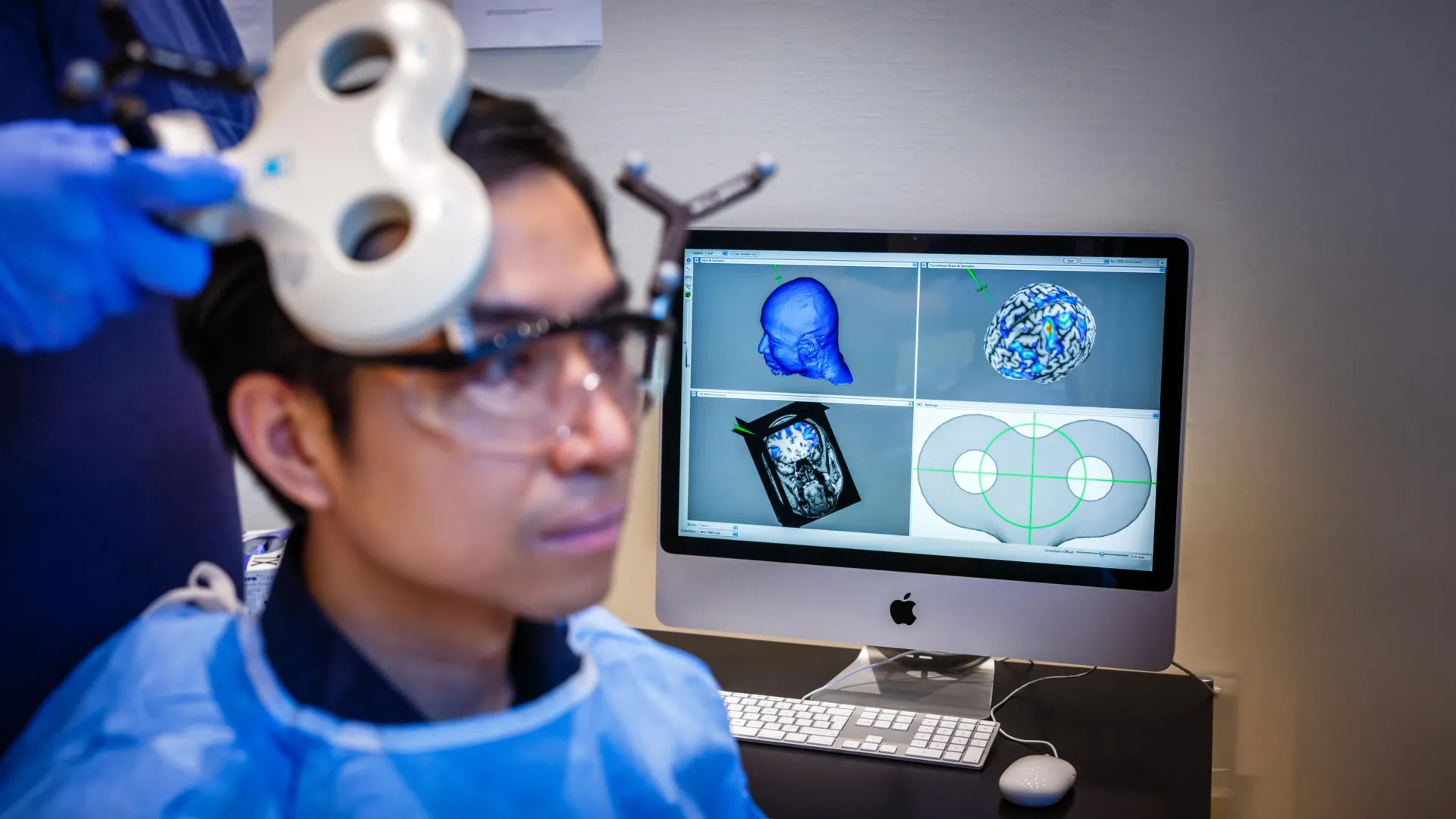
    Non-invasive brain stimulation that nudges two brain regions to operate in sync may slightly increase generous choices, according to a study published in PLOS Biology on February 10. Researchers say the results add evidence that specific brain-network communication can shape social decision-making.

    The international team, led by Jie Hu of East China Normal University with collaborators at the University of Zurich, tested whether coordinating activity between frontal and parietal areas affects altruism. These regions are often associated with goal-directed behavior and higher-level reasoning during complex choices.

    Testing generosity in a lab game

    The experiment included 44 participants who completed 540 rounds of a standard behavioral task known as the Dictator Game. In each round, a participant decided how to split money with another person, with the amounts varying across decisions.

    During the task, the researchers applied transcranial alternating current stimulation, a technique designed to influence brain rhythms through weak electrical currents delivered via the scalp. The goal was to encourage synchrony between the targeted frontal and parietal regions at specific oscillation frequencies.

    Gamma synchrony showed the clearest shift

    When stimulation was set to strengthen gamma-band synchrony between the two regions, participants became modestly more likely to choose larger splits for the other person. The effect was most apparent even in situations where giving more meant the participant would take less than their counterpart.

    Using computational modeling, the team reported that the stimulation appeared to change how people weighed outcomes, increasing the importance placed on the other person’s payoff. The authors described this as a measurable shift in value computations rather than a simple preference for equal splits.

    Limits and what comes next

    The researchers noted they did not directly record neural activity during stimulation, meaning the intended brain synchrony was inferred rather than confirmed in real time. They suggested future studies combining stimulation with EEG could verify how brain signals change and how long any behavioral effects last.

    Coauthor Christian Ruff said the work helps link a specific communication pattern between brain regions to altruistic choices, while Hu emphasized the study’s attempt to demonstrate cause and effect. The team cautioned that the increase in generosity was small and the findings do not imply a tool for controlling behavior outside controlled research settings.