Tag: Major depressive disorder

  • Cutting Daily TV Time May Lower Depression Risk, With Middle Age Seeing the Biggest Gains

    Cutting Daily TV Time May Lower Depression Risk, With Middle Age Seeing the Biggest Gains

    Reducing time spent watching television and replacing it with more active or restorative habits may lower the risk of major depressive disorder, according to a new study published in European Psychiatry.

    The research suggests the strongest benefits appear in middle-aged adults, while effects are smaller or less consistent among younger and older groups.

    Unlike earlier studies that often linked sedentary behavior to poorer mental health in general, the new analysis focused on what happens when TV time is actively swapped for specific alternatives such as sports, sleep, or other daily activities.

    Lead author Rosa Palazuelos-González of the University of Groningen said the work helps clarify how reallocating screen time, rather than simply reducing it, could influence depression risk over time.

    What the researchers measured

    The study drew on Lifelines, a large Dutch population cohort that followed 65 454 adults who did not have depression at the start of the analysis.

    Participants were tracked for four years, reporting time spent watching TV, sleeping, doing household tasks, commuting, leisure activity, physical activity at work or school, and sports.

    Major depressive disorder was assessed using the Mini International Neuropsychiatric Interview, a structured diagnostic tool widely used in clinical and research settings.

    When researchers modeled a 60-minute shift away from TV toward other activities, they found an 11% lower likelihood of developing major depression across the overall sample.

    In scenarios where 90 or 120 minutes were reallocated, the estimated reduction in likelihood increased, reaching about 25.91% for larger shifts.

    Middle age stands out most

    The largest estimated improvements were seen in middle-aged adults, where replacing one hour of TV per day was associated with an 18.78% lower risk of developing depression.

    In that same age group, reallocating 90 minutes was linked to a 29% reduction, and replacing two hours corresponded to a 43% drop in risk.

    Most substitutions were associated with better outcomes, but swapping only 30 minutes of TV for household chores did not appear to meaningfully change risk.

    By contrast, replacing 30 minutes with sports was associated with an 18% reduction, the biggest improvement among the activities analyzed.

    Why age differences may matter

    Among older adults, the researchers did not find broad, statistically meaningful changes when TV time was redistributed, except when the replacement activity was sports.

    In that group, shifting 30 to 90 minutes from TV to sports was linked to modest decreases in depression probability.

    In younger adults, moving time away from TV toward physical activity did not significantly change depression risk in the models.

    The authors suggested this may be because younger participants tend to be more active overall, potentially already meeting thresholds where additional activity yields smaller mental health benefits.

    The findings do not prove that television causes depression, but they add evidence that how people spend discretionary time may matter, especially in midlife.

    For individuals looking to reduce risk, the results point toward practical substitutions, with sports and other movement-based activities showing the most consistent associations.

  • Reelin protein study hints at new way to strengthen leaky gut and reduce depression symptoms

    Reelin protein study hints at new way to strengthen leaky gut and reduce depression symptoms

    Researchers at the University of Victoria in Canada say a naturally occurring protein called Reelin may help explain how chronic stress can affect both the gut and the brain. Their findings, published in the journal Chronic Stress, point to Reelin as a potential target for future treatments aimed at gut barrier damage and depression-related symptoms.

    The study focuses on the gut barrier, the lining that controls what passes from the intestines into the bloodstream. Under prolonged stress, that barrier can become more permeable, a process often described as leaky gut, which may allow bacterial components to enter circulation and trigger immune inflammation.

    How stress may lower Reelin

    In preclinical experiments, the team observed that chronic stress was associated with reduced Reelin levels in intestinal tissue. When researchers administered a single small dose of Reelin, levels in the intestine returned to what the scientists described as normal ranges in their model.

    The authors argue the result matters because gut inflammation is increasingly studied as a contributor to mood disorders through the gut-brain axis. In this framework, immune signals and inflammatory processes can influence brain function, potentially worsening depression in vulnerable people.

    Why the gut-brain link matters

    Previous research has reported lower Reelin levels in brain tissue among people diagnosed with major depressive disorder, and similar patterns have been seen in stressed animal models. In earlier preclinical work cited by the team, Reelin administration was linked with antidepressant-like effects, though this does not yet demonstrate clinical benefit in humans.

    The researchers also highlight that the intestinal lining typically renews rapidly, roughly every few days, to maintain an effective barrier. They suggest Reelin may support this renewal process, which could help prevent barrier breakdown and reduce inflammation-driven effects that can intersect with depression.

    What comes next for Reelin research?

    Scientists caution that translating these findings into a therapy would require extensive follow-up, including safety studies, dosing work, and eventually human clinical trials. For now, the study adds to growing evidence that treating depression may, in some cases, involve addressing biological processes outside the brain, including gut integrity and immune activation.

    The research was supported by funding from Canada’s federal granting agencies, including the Canadian Institutes of Health Research and the Natural Sciences and Engineering Research Council of Canada. The authors say further studies will be needed to clarify how Reelin works across tissues and whether it can be developed into a practical medical intervention.

  • PET brain scans map ketamine’s rapid antidepressant effect, pointing to a potential biomarker for treatment-resistant depression

    PET brain scans map ketamine’s rapid antidepressant effect, pointing to a potential biomarker for treatment-resistant depression

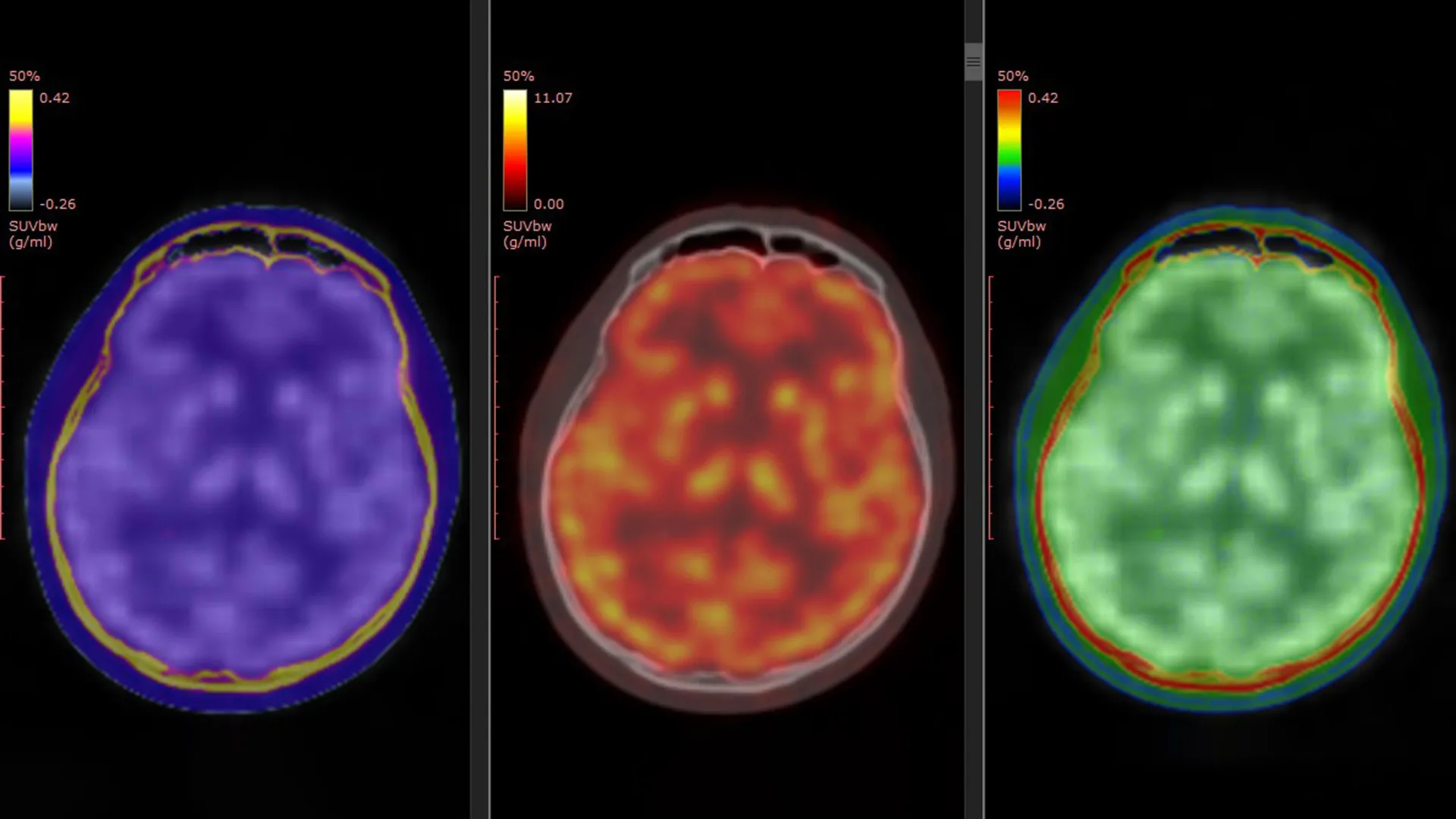
    Researchers in Japan have reported some of the clearest human evidence yet of how ketamine can relieve symptoms of treatment-resistant depression, using PET brain imaging to track changes in key glutamate receptors. The work adds molecular detail to a treatment already known for acting faster than standard antidepressants.

    Major depressive disorder is a leading cause of disability worldwide, and a substantial share of patients do not improve after trying multiple first-line therapies. For those with treatment-resistant depression, ketamine and the related medicine esketamine have drawn attention because some patients feel relief within hours or days rather than weeks.

    What the PET scans measured

    The study, published in Molecular Psychiatry, used a PET tracer called [11C]K-2 designed to visualize AMPA receptors, proteins that help regulate communication between brain cells. Scientists have long suspected that AMPA receptor activity is central to ketamine’s antidepressant effects, but direct confirmation in living people has been limited.

    The researchers combined data from three clinical trials, comparing 34 patients with treatment-resistant depression against 49 healthy participants. Patients received intravenous ketamine or placebo over a two-week period, with PET scans taken before treatment and after the final infusion.

    Receptor shifts tied to symptom relief

    Before treatment, the PET data suggested patients with treatment-resistant depression had region-specific differences in AMPA receptor availability compared with healthy controls. After ketamine, the brain changes were not uniform, instead appearing as shifts in particular areas involved in mood and reward processing.

    Crucially, the degree and location of AMPA receptor changes tracked with how much a patient’s depressive symptoms improved. The authors highlighted especially notable shifts in regions linked in prior research to depression circuitry, arguing the images provide a direct bridge between earlier animal findings and human clinical response.

    Why it could matter clinically

    If replicated, AMPA receptor PET imaging could become a candidate biomarker to help predict who is most likely to benefit from ketamine, and to guide dosing or treatment strategies. That could be valuable because ketamine response can vary, and clinicians are seeking ways to personalize care while balancing benefit, side effects, and monitoring needs.

    The researchers caution that PET imaging is complex and not widely available, and larger studies would be needed before it could influence routine practice. Still, mapping ketamine’s effects at the receptor level may also support development of new rapid-acting antidepressants that target similar pathways with fewer practical barriers.

  • Study links early depression to brain cell energy changes, hinting at a future blood test

    Study links early depression to brain cell energy changes, hinting at a future blood test

    New research suggests major depressive disorder may be tied to early disruptions in how cells generate and manage energy, a finding that could eventually support earlier and more targeted treatment. Scientists say the results add biological detail to a condition still often diagnosed mainly through symptoms and clinical interviews.

    The study focused on adenosine triphosphate, or ATP, sometimes described as the body’s energy currency because it powers basic cellular work. Researchers examined ATP-related signals in both the brain and blood, aiming to see whether measurable energy patterns track with depression in young adults.

    What the scientists measured

    Teams at the University of Queensland and the University of Minnesota analyzed brain imaging and blood samples from 18 participants aged 18 to 25 diagnosed with major depressive disorder. Their results were compared with samples from people without depression to identify differences linked to the illness.

    According to the researchers, the approach is notable because it looked for matching patterns across the brain and the bloodstream, not just in one system. That raises the possibility that, with more evidence, peripheral markers in blood could one day help flag risk or subtypes of depression earlier.

    An unexpected pattern under stress

    The researchers reported that cells from participants with depression showed higher energy-molecule production while at rest, but had difficulty ramping up energy output when challenged. That stress-response limitation, they argue, could align with common symptoms such as fatigue, slowed thinking, and reduced motivation.

    Scientists involved in the work suggest the pattern may reflect mitochondria that are effectively overcompensating early on, then struggling when demand increases. They caution that the study is small, but say it offers a plausible cellular mechanism worth testing in larger groups.

    What this could mean next

    Major depressive disorder is common and can take years to match with an effective treatment, particularly when fatigue is prominent and persistent. The authors argue that identifying measurable biological signatures could support earlier intervention and more personalized care, rather than trial-and-error alone.

    The research was published in Translational Psychiatry, and the team says follow-up studies are needed to confirm the findings, test whether they predict outcomes, and determine whether they apply across ages and different forms of depression. If replicated, the work could also help frame depression as a whole-body condition with detectable biological changes.