Tag: Science Advances

  • Fizikai apsiriko dėl kvantinės medžiagos: atrado visiškai naują, ne kvantinę medžiagos būseną

    Fizikai apsiriko dėl kvantinės medžiagos: atrado visiškai naują, ne kvantinę medžiagos būseną

    Kas buvo laikyta kvantine medžiaga

    Fizikai dešimtmečius ieško vadinamųjų kvantinių sukinio skysčių – medžiagų būsenų, kuriose magnetiniai momentai nesusirikiuoja į įprastą tvarką net labai žemoje temperatūroje. Tokios sistemos laikomos perspektyviomis tiek fundamentaliems magnetizmo tyrimams, tiek ilguoju laikotarpiu galint prisidėti prie stabilesnių kvantinių technologijų.

    Naujas tarptautinės tyrėjų grupės darbas parodė, kad viena iš anksčiau daug žadėjusių kandidačių iš tikrųjų nėra kvantinis sukinio skystis. Vietoj to mokslininkai teigia aptikę iki šiol neaprašytą, ne kvantinę medžiagos būseną, kuri gali pakeisti tai, kaip vertinami tokie kandidatai.

    Medžiaga, kuri suklaidino tyrėjus

    Tyrime analizuotas kristalas cerio magnio heksaaliuminatas CeMgAl11O19 anksčiau buvo priskirtas kvantinio sukinio skysčio kandidatams dėl dviejų požymių. Pirma, matuota sužadinimų kontinuumo struktūra, antra, nebuvo aptikta įprastinė magnetinė tvarka.

    „Ši medžiaga buvo priskirta kvantiniam sukinio skysčiui pagal du požymius: kontinuumo stebėjimą ir magnetinės tvarkos nebuvimą“, – sakė Rice universiteto fizikas Bin Gao.

    Pasak autorių, išsamesni matavimai parodė, kad šie požymiai nebūtinai reiškia kvantinę kilmę. Kitaip tariant, kriterijai, kuriais iki šiol dažnai remtasi ieškant kvantinių sukinio skysčių, gali būti mažiau patikimi, nei manyta.

    Ką parodė išsamūs matavimai

    Tyrėjai taikė kelis eksperimentinius metodus, įskaitant rentgeno ir neutronų sklaidą, temperatūros mažinimą ir išorinio magnetinio lauko poveikį. Tokie matavimai leidžia atskleisti, kaip elgiasi sukiniai ir kokia yra sužadinimų, pavyzdžiui, sukinio bangų, sandara kristale.

    „Atidesnis stebėjimas parodė, kad šių reiškinių priežastis nebuvo kvantinio sukinio skysčio fazė“, – sakė Bin Gao.

    Autorių teigimu, QSL primenančius signalus sukūrė konkuruojančios magnetinės sąveikos ir neįprasta atomų sandara, o ne kvantinė sukinio skysčio būsena. Dėl to CeMgAl11O19 atmetamas kaip QSL pavyzdys, tačiau pats atrastas režimas laikomas nauju ir svarbiu reiškiniu.

    „Tai nebuvo kvantinis sukinio skystis, tačiau matėme elgseną, kurią buvome linkę sieti su kvantiniu sukinio skysčiu“, – sakė Rice universiteto fizikas Tong Chen.

    Kodėl tai svarbu kvantinėms technologijoms

    Kvantinių sukinio skysčių idėja siejama su galimomis praktiškomis kryptimis, nes tokiose sistemose gali atsirasti neįprasti kvazinariai ir topologiniai efektai. Teoriškai tai galėtų būti naudinga kuriant atsparesnius informacijos nešėjus, o kvantinių skaičiavimų kontekste tai siejama su siekiu mažinti klaidų tikimybę ir jautrumą trikdžiams.

    Tačiau naujasis rezultatas pabrėžia, kad vien tik kontinuumo požymis ir magnetinės tvarkos nebuvimas nėra pakankamas pagrindas tvirtai teigti, jog aptikta būtent kvantinio sukinio skysčio būsena. Mokslininkams tai reiškia griežtesnį kandidatų patikrinimą ir didesnį dėmesį alternatyvioms, ne kvantinėms interpretacijoms.

    „Tai nauja medžiagos būsena, kurią, kiek žinome, pirmieji aprašėme mes“, – sakė Rice universiteto fizikas Pengcheng Dai.

    Tyrėjai pabrėžia, kad šis darbas padės tikslinti eksperimentinius kriterijus ir geriau atskirti, kur iš tiesų pasireiškia kvantinis sukinio skystis, o kur panašius signalus sukuria sudėtinga, bet klasikinė magnetinė dinamika. Tyrimo rezultatai publikuoti žurnale Science Advances.

  • New study maps adolescent synapse hotspots, raising fresh questions about brain pruning and schizophrenia risk

    New study maps adolescent synapse hotspots, raising fresh questions about brain pruning and schizophrenia risk

    Researchers have identified previously overlooked synapse hotspots that form during adolescence, suggesting the teenage brain may actively build dense new connections alongside the well-known process of synaptic pruning. The findings, reported by Kyushu University scientists in Science Advances, add nuance to how neural circuits mature during a critical developmental window.

    Synapses are the communication points between neurons, and for decades a common model held that synapse numbers rise in childhood and then drop in adolescence as weaker links are removed. That pruning-focused framework has influenced theories of neuropsychiatric disorders, including the idea that excessive synapse loss could contribute to schizophrenia.

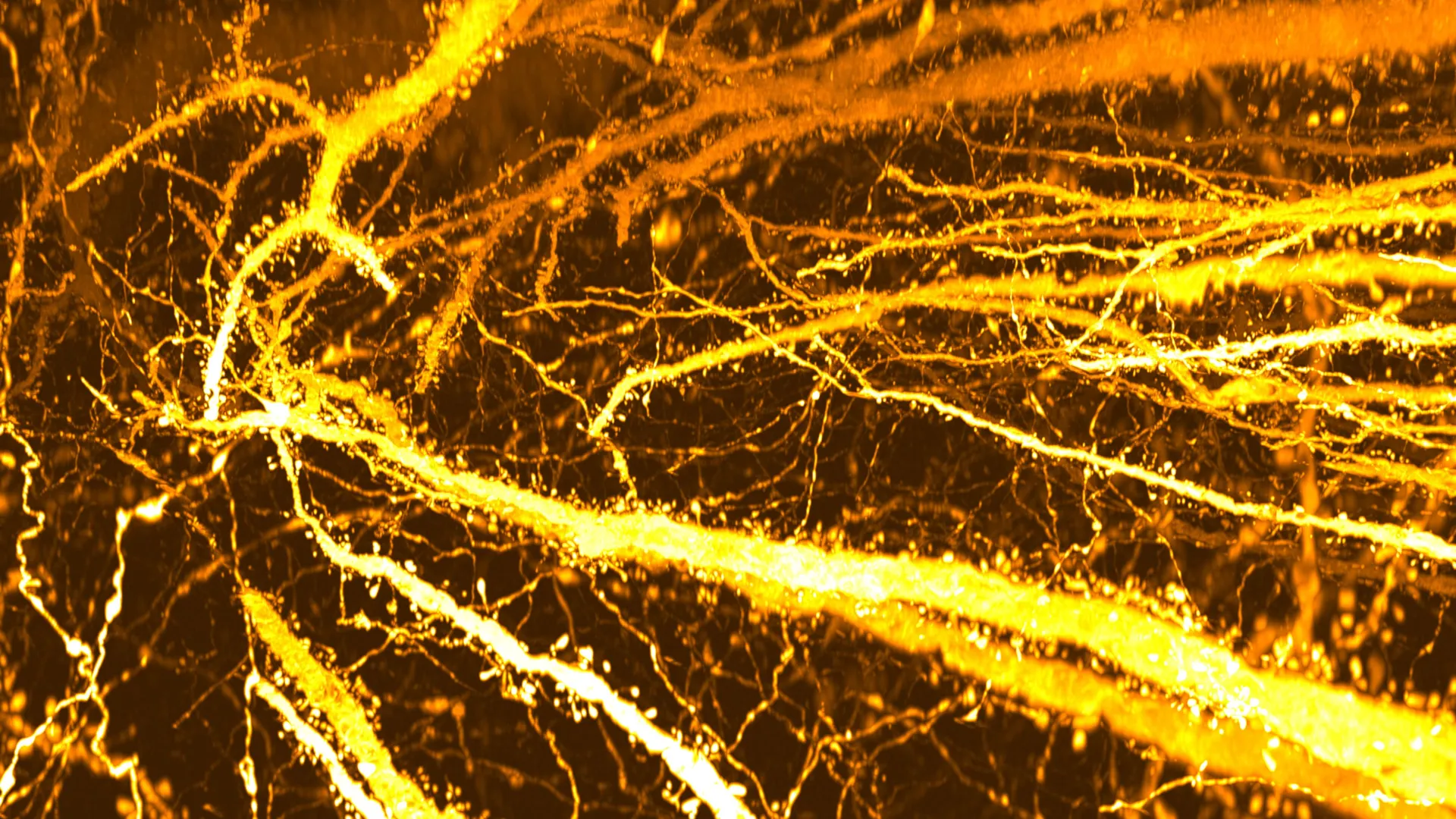
    The new work points to a more complex picture: localized bursts of synapse formation in specific parts of neurons. Using a tissue-clearing technique and super-resolution imaging, the team mapped dendritic spines across entire Layer 5 cortical neurons, which play a major role in integrating signals and producing cortical output.

    In young mice before weaning, dendritic spines were distributed more evenly along neurons. Between about three and eight weeks of age, the researchers observed a sharp rise in spine density in a single section of the apical dendrite, culminating in a tightly packed hotspot that was not present earlier.

    The authors argue this pattern means adolescent development is not defined solely by pruning, but also by targeted construction of new synaptic clusters. They also report that in mice carrying mutations in genes linked to schizophrenia risk, the hotspot did not develop normally because synapse formation during adolescence was reduced.

    While the results rely on mouse models and do not confirm the same mechanism in humans, they sharpen questions about which circuits are built during adolescence and how disruptions might alter brain function. The researchers say the next step is to identify the brain regions and inputs driving these newly formed connections during the adolescent period.

  • Explainable AI tool CANYA decodes protein aggregation patterns, offering new clues for amyloid diseases and drug manufacturing

    An AI tool has made a step forward in translating the language proteins use to dictate whether they form sticky clumps similar to those linked to Alzheimer’s Disease and around fifty other types of human disease. In a departure from typical “black-box” AI models, the new tool, CANYA, was designed to be able to explain its decisions, revealing the specific chemical patterns that drive or prevent harmful protein folding.

    The discovery, published today in the journal Science Advances, was possible thanks to the largest-ever dataset on protein aggregation created to date. The study gives new insights about the molecular mechanisms underpinning sticky proteins, which are linked to diseases affecting half a billion people worldwide.

    Protein clumping, or amyloid aggregation, is a health hazard that disrupts normal cell function. When certain patches in proteins stick to each other, proteins grow into dense fibrous masses that have pathological consequences.

    While the study has some implications for accelerating research efforts for neurodegenerative diseases, it’s more immediate impact will be in biotechnology. Many drugs are proteins, and they are often hampered by unwanted clumping.

    “Protein aggregation is a major headache for pharmaceutical companies,” says Dr. Benedetta Bolognesi, co-corresponding author of the study and Group Leader at the Institute for Bioengineering of Catalonia (IBEC).

    “If a therapeutic protein starts aggregating, manufacturing batches can fail, costing time and money. CANYA can help guide efforts to engineer antibodies and enzymes that are less likely to stick together and reduce expensive setbacks in the process,” she adds.

    Protein clumps are formed using a poorly understood language. Proteins are made of twenty different types of amino acids. Instead of the usual A, C, G, T letters that make up the language of DNA, a protein’s language has twenty different letters, different combinations of which form “words” or “motifs.”

    Researchers have long sought to decipher which combinations of motifs cause clumping and which others enable proteins to fold without error. Artificial intelligence tools that treat amino acids like the alphabet of a mysterious language could help identify the precise words or motifs responsible, but the quality and volume of data about protein aggregation needed to feed models have been historically scant or restricted to very small protein fragments.

    The study addressed this challenge by carrying out large-scale experiments. The authors of the study created over 100,000 completely random protein fragments, each 20 amino acids long, from scratch. The ability for each synthetic fragment to clump was tested in living yeast cells. If a particular fragment triggered clump formation, the yeast cells would grow in a certain way that could be measured by the researchers to determine cause and effect.

    Around one in every five protein fragments (21,936/100,000) caused clumping, while the rest did not. While previous studies might have tracked a handful sequences, the new dataset captures a much bigger catalogue of the different protein variants which can cause amyloid aggregation.

    “We created truly random protein fragments including many versions not found in nature. Evolution has explored only a fraction of all possible protein sequences, while our approach helps us peer into a much bigger galaxy of possibilities, providing lots of data points to help understand more general laws of aggregation behaviour,” explains Dr. Mike Thompson, first author of the study and postdoctoral researcher at the Centre for Genomic Regulation (CRG).

    The vast amount of data generated from the experiments was used to train CANYA. The researchers decided to create it using the principles of “explainable AI,” making its decision-making processes transparent and understandable to humans. This meant sacrificing a little bit of its predictive power, which is usually higher in “black-box” AIs. Despite this, CANYA proved to be around 15% more accurate than existing models.

    Specifically, CANYA is a convolution-attention model, a hybrid tool borrowing from two distinct corners of AI. Convolution models, like those used in image recognition, scan photos for features like an ear or a nose to identify a face, except in this case CANYA skims through the protein chain to find meaningful features like motifs or “words.”

    Attention AI models are used by language translation tools to identify key phrases in a sentence before deciding on the best translation. The researchers incorporated this technique to help CANYA figure out which motifs matter most in the grand scheme of the entire protein.

    Together, these two approaches help CANYA see local motifs up close while also spotting their bigger-picture importance. The researchers could use this information to not just predict which motifs in the protein chain encourage clumping, block it, or something in between, but also understand why.

    For example, CANYA showed that small pockets of water-repelling amino acids are more likely to spark clumping, while some motifs have a bigger impact on clumping if they’re near the start of a protein sequence rather than at the end. The observations align with previous findings researchers have seen under the microscope in known amyloid fibrils.

    But CANYA also found new rules driving protein aggregation. For instance, certain building blocks of proteins, so-called charged amino acids, are normally thought to prevent clumping. But it turns out that in the context of other specific building blocks, they can actually promote clumping.

    In its current form, CANYA primarily explains protein aggregation in yes or no terms, i.e. it works as a so-called “classifier.” The researchers next want to refine the system so it can predict and compare aggregation speeds rather than just aggregation likelihood. This could help predict which protein variants form clumps quickly and which do so more slowly, a vital factor in neurodegenerative diseases where the timing of amyloid formation matters just as much as the fact that it happens at all.

    “There are 1024 quintillion ways of creating a protein fragment that is 20-amino acids long. So far, we’ve trained an AI with just 100,000 fragments. We want to improve it by making more and bigger fragments. This is just the first step but our work shows it is possible to decipher the language of protein aggregation. This is incredibly important for our understanding of human disease but also to guide synthetic biology efforts” concludes Dr. Bolognesi.

    “This project is a great example of how combining large-scale data generation with AI can accelerate research. It’s also a very cost-effective method to generate data,” says ICREA Research Professor Ben Lehner, co-corresponding author and Group Leader at the Centre for Genomic Regulation (CRG) and the Wellcome Sanger Institute.

    “Using DNA synthesis and sequencing we can perform hundreds of thousands of experiments in a single tube, generating the data we need to train AI models. This is an approach we are applying to many difficult problems in biology. The goal is to make biology predictable and programmable,” he adds.

    The study is a joint collaborative effort by ICREA Research Professor Ben Lehner’s lab at the Centre for Genomic Regulation (CRG) and Benedetta Bolognesi’s lab at the Institute for Bioengineering of Catalonia (IBEC). Researchers from Cold Spring Harbor Laboratory (CSHL) and Wellcome Sanger Institute also collaborated in the study. It was funded by “La Caixa” Research Foundation, the European Research Council and the Spanish Ministry of Science and Innovation.

  • Study identifies DeltaFosB in the hippocampus as a key driver of cocaine relapse, opening a path to targeted treatments

    Study identifies DeltaFosB in the hippocampus as a key driver of cocaine relapse, opening a path to targeted treatments

    Scientists at Michigan State University have pinpointed a brain protein that appears to be essential for the circuit changes that fuel cocaine relapse, offering a clearer biological explanation for why cravings can persist long after use stops. The findings, published in Science Advances and supported by the US National Institutes of Health, focus on a molecule called DeltaFosB.

    The research highlights the hippocampus, a region central to memory and learning, and its interaction with reward pathways involved in drug seeking. By linking relapse risk to durable changes in these circuits, the study adds weight to the view that cocaine addiction is driven by brain biology rather than willpower alone.

    How cocaine rewires memory circuits

    Unlike opioids, stopping cocaine does not typically cause severe physical withdrawal, yet relapse remains common, and no FDA-approved medication is specifically indicated for cocaine use disorder. Cocaine’s surge of dopamine reinforces drug-taking, while memory-linked cues can later reignite the urge to use.

    Using mouse models and a specialized CRISPR-based approach, the team found that DeltaFosB acts like a genetic switch in a pathway connecting reward centers and the hippocampus. With repeated cocaine exposure, DeltaFosB accumulates and changes how neurons respond, increasing the drive to seek the drug.

    Genes that intensify cocaine seeking

    The researchers also identified genes influenced by DeltaFosB after longer-term cocaine exposure, including calreticulin, which helps regulate how neurons communicate. In experiments, higher calreticulin activity appeared to boost signaling in pathways that promote continued cocaine seeking.

    Crucially, the study suggests DeltaFosB is not merely associated with these adaptations but required for them to fully develop. When the protein’s role was disrupted, cocaine did not produce the same patterns of brain activity changes linked to persistent drug seeking.

    What this could mean for treatment

    Because many of the implicated genes and circuits are conserved across mammals, the authors say the findings could help guide human research, though direct clinical implications remain years away. The group is now collaborating with the University of Texas Medical Branch to develop compounds aimed at altering how DeltaFosB binds to DNA.

    Future work will also explore how hormones may shape these circuits and whether addiction-related brain adaptations differ between males and females. Such insights could eventually support more personalized approaches to treating cocaine use disorder.