Tag: Smegenų vystymasis

  • Childhood Air Pollution May Weaken Teen Brain Connectivity, New Generation R Study Suggests

    A study led by the Barcelona Institute for Global Health (ISGlobal) reports that children exposed to higher levels of air pollution early in life show weaker connections between key brain regions. The findings, published in Environment International, add to evidence that pollution may influence neurodevelopment.

    Researchers focused on functional connectivity, a measure of how strongly brain areas coordinate activity within and between networks. These networks support attention, movement control, sensory processing, and other cognitive functions that continue to mature through adolescence.

    What the researchers measured

    The analysis used data from 3 626 children in the long-running Generation R cohort in Rotterdam. Air pollution exposure at home addresses was estimated for particulate matter PM2.5 and PM10, plus nitrogen dioxide and other nitrogen oxides.

    Brain scans were taken at rest, first at around age 10 and again at an average age of 14. The team compared pollution exposure from birth to age three with exposure in the year immediately before each neuroimaging assessment.

    Signals seen across adolescence

    Higher pollution exposure from birth to age three was linked to lower connectivity between the amygdala and cortical networks involved in attention, somatomotor function, and auditory processing. The amygdala plays a central role in emotional processing and threat responses.

    Separately, higher recent exposure to PM10 in the year before scanning was associated with reduced connectivity between the salience network and the medial-parietal network. These networks are involved in detecting relevant stimuli and supporting introspection and self-referential thinking.

    Authors cautioned that the study identifies associations rather than proving causation, and that further work is needed to clarify biological mechanisms. Still, they noted that some links appeared to persist through adolescence, raising questions about longer-term effects on cognition and emotion.

    How this fits with earlier findings

    The same research group has also reported associations between prenatal and childhood pollution exposure and changes in brain volume in the Generation R cohort. In that work, higher prenatal exposure to PM2.5 and certain metals was tied to a smaller hippocampus at age 8, followed by signs consistent with compensatory growth later.

    Together, the studies reinforce concerns that common urban air pollution exposures may coincide with measurable differences in the developing brain. The researchers argue the results support policies aimed at reducing traffic-related pollution where children live, learn, and play.
  • Study finds earlier bedtimes and longer sleep may sharpen teens cognitive performance, even with small differences

    Adolescents who sleep a little longer and tend to fall asleep earlier show stronger brain function and do better on cognitive tests than peers with later, shorter sleep, according to researchers in the UK and China.

    The findings draw on objective sleep tracking and brain imaging, offering fresh evidence that modest changes in sleep habits may be linked to measurable differences in how the teenage brain works.

    Researchers analyzed data from the Adolescent Brain Cognitive Development study in the United States, using Fitbit sleep measures from more than 3 200 participants aged 11 to 12 and comparing them with brain scans and cognitive testing.

    They then checked whether similar patterns appeared in two additional groups aged 13 to 14, totaling about 1 190 participants, to see if the results held up beyond a single age snapshot.

    The team identified three broad sleep profiles, with average sleep times ranging from about 7 hours 10 minutes to roughly 7 hours 25 minutes, a gap of just over 15 minutes between the shortest and longest sleepers.

    Despite the small difference, adolescents in the longest-sleep group performed best on tests that assess skills such as vocabulary, reading, problem solving, and focus.

    Brain measures differed across groups

    Brain imaging also showed differences that tracked with sleep patterns, with the longest-sleep group showing the largest overall brain volume and stronger brain function measures, while the shortest-sleep group showed the smallest volume and weakest measures.

    The study did not find significant differences in school achievement between groups, suggesting standardized academic outcomes may not capture the subtler cognitive effects observed in testing.

    Heart-rate data during sleep pointed in the same direction: the longest-sleep group had the lowest heart rates across sleep states, while the shortest-sleep group had the highest.

    Lower sleeping heart rates are generally associated with better cardiovascular health and can align with more stable, higher-quality sleep, while higher rates can accompany restless sleep and frequent awakenings.

    Most teens still fell short

    Even the best sleepers in the study were not reaching the amount of sleep typically recommended for adolescents, highlighting how widespread sleep shortfalls can be in early teen years.

    The American Academy of Sleep Medicine advises that teenagers aged 13 to 18 should regularly sleep 8 to 10 hours per night for optimal health, while many fall below that range.

    Because the dataset follows participants over time, researchers reported that differences in sleep patterns and related brain and cognitive measures appeared to persist across multiple years around the main assessment window.

    The authors cautioned that the study cannot prove that better sleep directly causes better brain function, but they noted prior research supporting sleep’s role in memory consolidation and learning.

    What could be driving later bedtimes?

    The researchers said the next step is to better understand why some adolescents consistently go to bed later and sleep less, including potential influences such as evening screen use and individual body-clock differences.

    They argue that identifying the drivers of sleep loss could help shape practical interventions, since the results suggest even small improvements in sleep timing and duration may matter.

  • Study of the hippocampus suggests newborn brains start densely wired, then prune connections for sharper memory

    Study of the hippocampus suggests newborn brains start densely wired, then prune connections for sharper memory

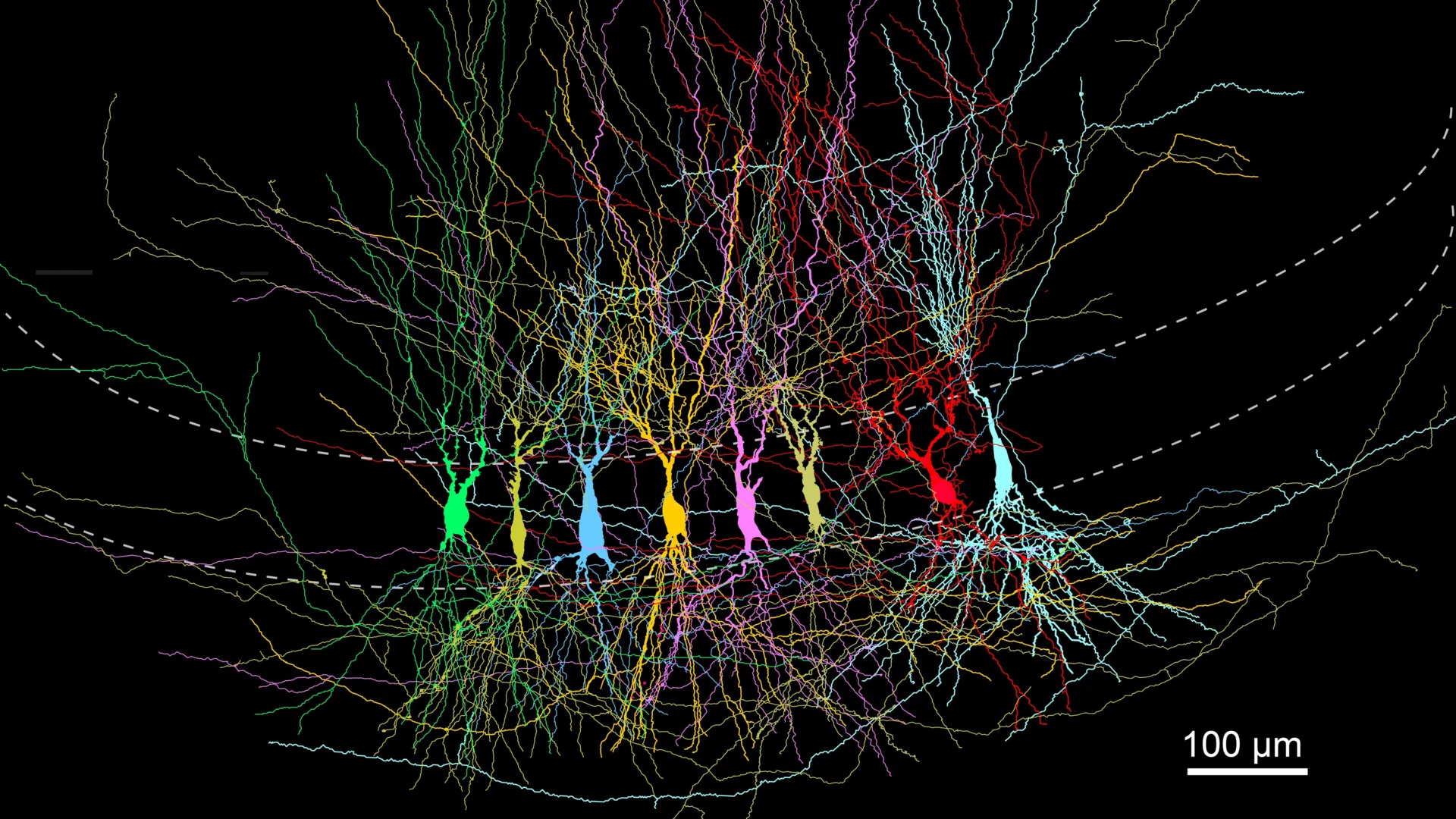
    The hippocampus, a brain region essential for forming memories and mapping space, may develop in a way that challenges the long-held idea of the mind as a blank slate. New research from the Institute of Science and Technology Austria suggests key memory circuits begin life with unusually dense wiring that is later trimmed and refined.

    In a study published in Nature Communications, scientists examined how a major hippocampal network changes after birth in mice. The team focused on CA3 pyramidal neurons, cells widely seen as central to storing and retrieving memories.

    How the CA3 circuit develops

    Using patch-clamp recordings and high-resolution imaging, researchers compared the CA3 network across early postnatal stages, adolescence, and adulthood. The methods allowed them to measure tiny electrical signals and map how strongly neurons were connected at different ages.

    The results pointed to an early-life circuit that is highly connected and seemingly random, followed by a gradual shift toward fewer but more organized links. Rather than adding connections over time, the network became more efficient by losing many of its initial ones.

    Pruning may boost memory efficiency

    Lead researcher Peter Jonas said the pattern fits a pruning model in which the system starts full and then becomes streamlined. The researchers argue that an initially exuberant network could help the hippocampus quickly integrate different kinds of sensory information into usable memories.

    If the brain started with far fewer built-in links, the team notes, neurons would first need more time to find and connect to each other, potentially slowing early information processing. The study adds to broader evidence that brain development often involves overproduction of connections followed by activity-dependent pruning.

    While the work was conducted in mice, the hippocampus is highly conserved across mammals, making the findings relevant to ongoing debates about how genetics and experience shape learning. The authors say future research will need to clarify what signals drive which connections are kept or removed, and how this process relates to memory performance.