Tag: EEG

  • Schizophrenia study suggests brain prediction errors may drive hearing voices, and hints at an EEG biomarker

    Schizophrenia study suggests brain prediction errors may drive hearing voices, and hints at an EEG biomarker

    Researchers at UNSW Sydney say they have found some of the clearest evidence yet that auditory verbal hallucinations in schizophrenia may stem from a breakdown in how the brain recognizes its own inner speech. The team argues the brain may mislabel self-generated thoughts as if they were external voices.

    The study, published in Schizophrenia Bulletin, focuses on a well-known theory in psychiatry: that hallucinated voices can arise when the brain’s normal system for predicting the sound of one’s own speech fails. If that prediction signal misfires, activity in sound-processing regions may look more like the brain is hearing someone else.

    How inner speech is measured

    Because inner speech is private, testing it directly has long been difficult. The researchers used EEG recordings to track brain responses while participants silently imagined speaking simple syllables while hearing sounds through headphones.

    In everyday speech, the brain typically dampens activity in the auditory cortex because it anticipates the sensory consequences of one’s own voice. The new work examined whether that suppression effect also appears during imagined speech, and whether it differs in people who hear voices.

    What the EEG signals showed

    The experiment compared 55 people with schizophrenia spectrum disorders who had experienced auditory hallucinations within the previous week, 44 people with schizophrenia without recent hallucinations, and 43 healthy participants. During the task, participants imagined saying “bah” or “bih” while the same sounds were sometimes played aloud, without advance notice of a match.

    Healthy participants showed reduced brain responses when the imagined syllable matched the sound they heard, consistent with accurate prediction and sensory suppression. By contrast, people with recent hallucinations showed the opposite pattern, with stronger responses when the imagined and heard sounds matched.

    Participants with schizophrenia who had not recently heard voices showed responses between the other two groups. The authors say that gradient could indicate a link between the disrupted prediction mechanism and the current presence of hallucinations, rather than diagnosis alone.

    Could this become a biomarker?

    The team says the findings strengthen the case that some hallucinated voices feel real because the brain processes inner speech as if it were coming from outside. They also argue the EEG signature could eventually contribute to a biomarker approach, an area where schizophrenia still lacks definitive lab or imaging tests.

    Next, the researchers plan to test whether this response pattern can help identify people at elevated risk of psychosis before symptoms fully emerge. Earlier identification could support earlier intervention, although the authors note further validation is needed across broader populations and clinical settings.

  • EEG brain signals may offer a noninvasive path to restoring movement after spinal cord injury

    EEG brain signals may offer a noninvasive path to restoring movement after spinal cord injury

    Researchers are moving closer to a noninvasive way to help people with spinal cord injuries regain movement by decoding brain waves linked to intended actions. The approach centers on electroencephalography, or EEG, which records electrical activity from the scalp.

    In many spinal cord injuries, the brain can still generate normal movement commands, but damaged pathways prevent those signals from reaching muscles. That gap has driven efforts to build new routes for communication rather than repairing the spinal cord itself.

    A bid to avoid brain surgery

    A study published in APL Bioengineering by scientists in Italy and Switzerland examined whether EEG can reliably capture signals produced when patients attempt to move paralyzed limbs. The long-term goal is to translate those signals into commands that could drive assistive devices or stimulation therapies.

    Much of the earlier progress in brain-computer interfaces has relied on implanted electrodes that record activity directly from the brain. While implants can provide clearer signals, they also bring surgical risk and ongoing concerns such as infection and device complications.

    Why legs are harder to decode

    EEG is safer and easier to repeat, but it faces a fundamental limitation: signals recorded at the scalp are weaker and less precise than those captured inside the skull. This makes it difficult to pinpoint activity from deeper brain regions involved in movement control.

    The researchers noted that decoding attempts to move the legs can be especially challenging, because lower-limb control is represented more centrally in the brain. By contrast, signals for hand and arm movements are often easier to separate with surface recordings.

    Machine learning shows early promise

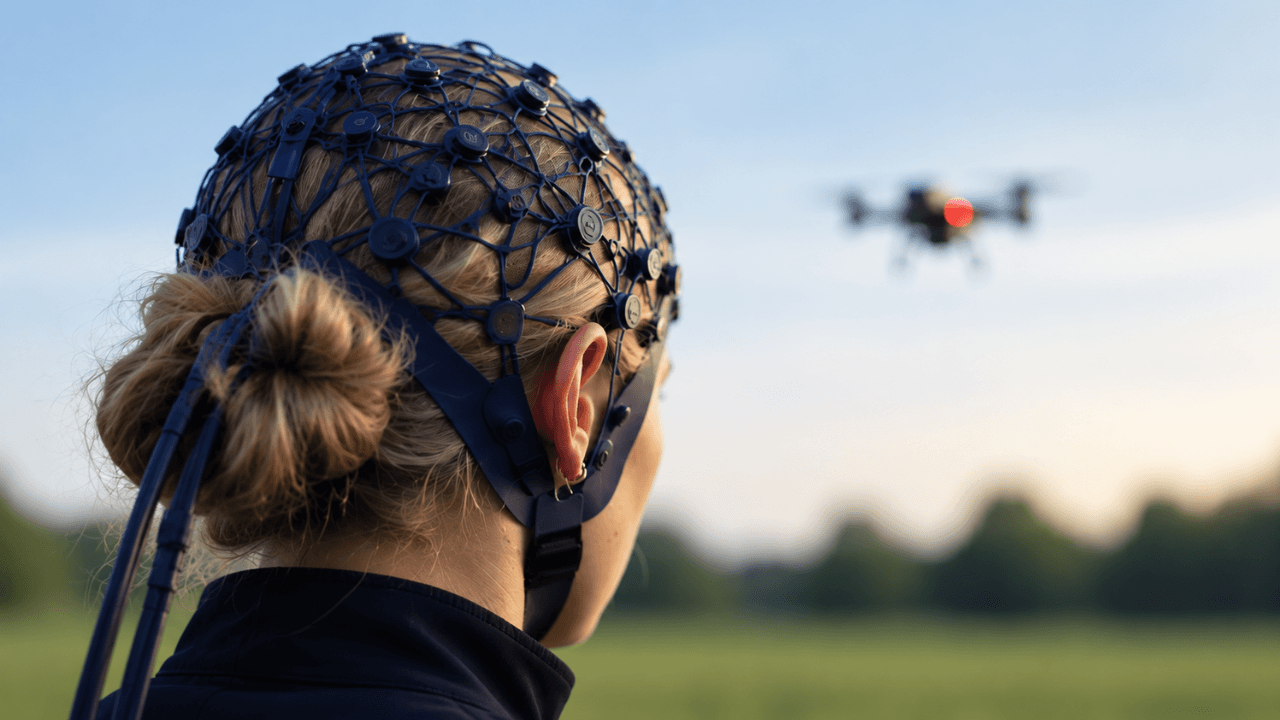
    To interpret the EEG patterns, the team used machine learning designed to work with small, complex datasets typical of clinical research. Patients wore an EEG cap and were asked to attempt simple movements while the system learned patterns associated with effort versus rest.

    The method could distinguish when a participant was trying to move versus staying still, but it struggled to reliably differentiate among specific movement types. The next step is improving classification so intended actions like standing or walking can be identified more consistently.

    Researchers say success would likely depend on better algorithms, improved EEG hardware, and careful integration with downstream technologies such as stimulators or external assistive systems. For patients, the appeal is clear: a potential route toward meaningful function without placing electrodes in the brain.

  • Study finds listeners use hand gestures to anticipate the next word in conversation

    In face-to-face conversation, people do more than listen to speech: they also read the hands. New research suggests that listeners use meaningful hand gestures to predict which words a speaker is likely to say next, speeding up comprehension.

    The work, led by scientists at the Max Planck Institute for Psycholinguistics and Radboud University in Nijmegen, tested whether gestures provide advance cues about upcoming speech. The team combined behavioural measures with electroencephalography, or EEG, to track how the brain responds.

    Avatars reveal predictive listening

    To tightly control timing and movement, the researchers used realistic virtual avatars that asked everyday questions. In one experiment, the avatar paused just before a key word, such as type, while making either a relevant typing gesture, a meaningless movement, or no movement at all.

    Participants were asked to guess how the sentence would end before hearing the missing word. They predicted the target word more often when they saw the matching gesture, indicating that hand movements can guide expectations about what comes next.

    EEG signals anticipation and easier processing

    A second experiment examined brain activity while a different group simply listened to the full questions. During the silent pause before the target word, EEG patterns associated with anticipation differed depending on whether a meaningful gesture was present.

    After the target word appeared, the brain showed a reduced N400 response when the gesture matched the word, a signal commonly linked to easier semantic processing. Together, the results suggest gestures help listeners prepare for upcoming meaning rather than merely adding emphasis after the fact.

    Implications for robots and assistants

    The findings also point to practical design choices for artificial agents, including robots and virtual assistants that use embodied avatars. If gestures can help humans predict speech in natural conversation, adding well-timed, meaningful hand movements could make synthetic communicators easier to understand.

    Researchers say the broader takeaway is that language comprehension is inherently multimodal. Listeners do not wait passively for words to arrive, but actively integrate visual cues such as gestures to anticipate what a speaker is about to say.