Tag: Paaugliai

  • Debatai dėl paauglių priklausomybės nuo interneto: Europos dieną Alytaus gimnazijos suvienijo jėgas

    Debatai dėl paauglių priklausomybės nuo interneto: Europos dieną Alytaus gimnazijos suvienijo jėgas

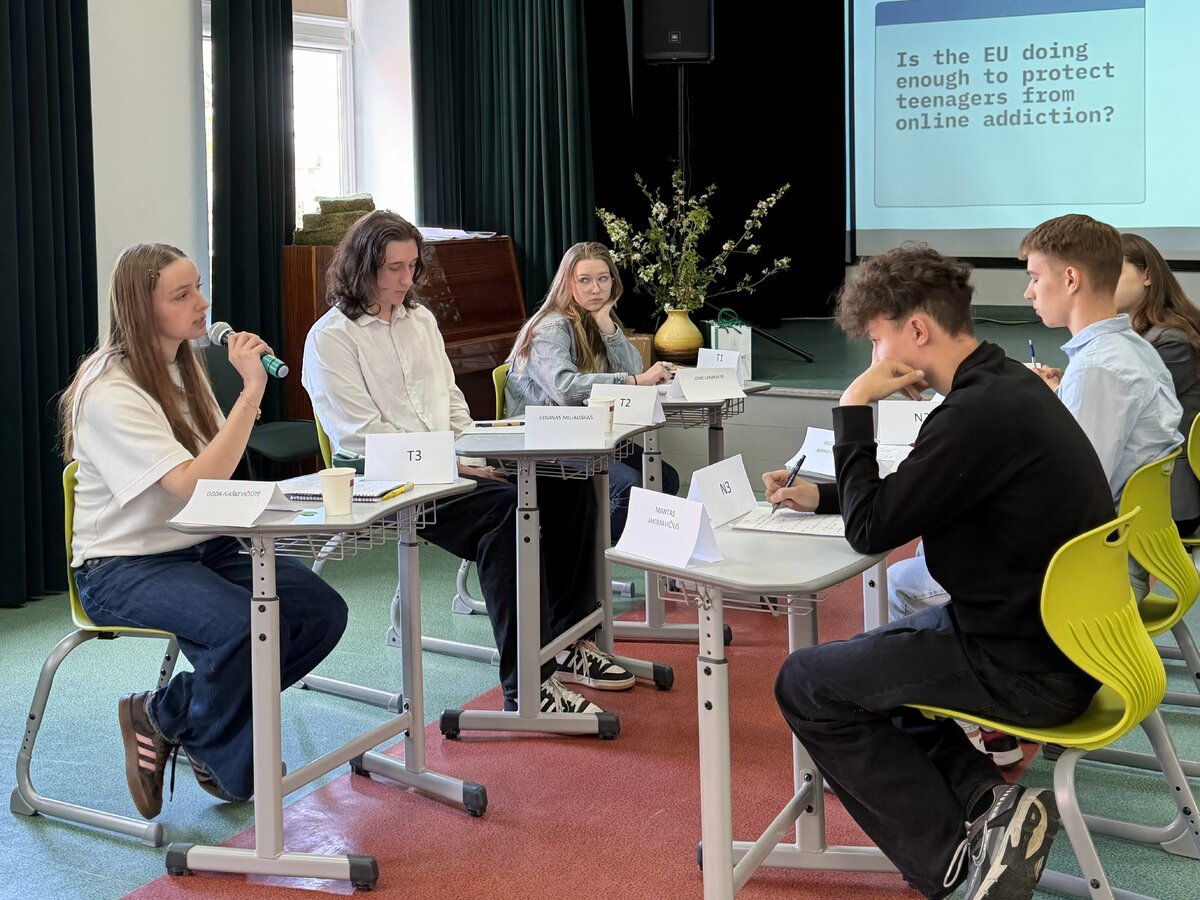
    Europos dienos proga gegužės 5 dieną Alytaus r. Daugų Vlado Mirono gimnazijoje surengtas debatų ir orientacinių varžybų renginys, į diskusiją subūręs ne tik rajono, bet ir Alytaus miesto gimnazistus. Tai antrus metus iš eilės vykstanti iniciatyva, kurią organizuoja gimnazijos MEPA komanda, veiklas koordinuoja anglų kalbos mokytoja Stasė Stoškuvienė.

    Į Daugus atvyko mokinių komandos iš Alytaus Jotvingių gimnazijos, Alytaus Adolfo Ramanausko-Vanago gimnazijos, Alytaus r. Butrimonių gimnazijos ir Alytaus r. Miroslavo gimnazijos. Renginio formatas sujungė dvi dalis: argumentuotus debatus ir praktines užduotis, skirtas geriau pažinti Europos Sąjungos institucijų veiklą.

    Ar ES saugo paauglius pakankamai?

    Pagrindinė debatų tema šiemet buvo „Ar Europos Sąjunga daro pakankamai, kad apsaugotų paauglius nuo priklausomybės nuo interneto?“. Mokiniai analizavo, kur baigiasi asmeninė atsakomybė ir prasideda valstybės bei platformų pareiga, o kartu kėlė klausimą, kokios priemonės realiai veikia kasdienėje paauglių aplinkoje.

    Teigiančioji pusė akcentavo, kad Europos Sąjungoje jau taikomos priemonės, skirtos jaunimo apsaugai skaitmeninėje erdvėje, o vis dažniau diskutuojama ir apie griežtesnį amžiaus patvirtinimą internete. Pasak jų, technologinės ir teisinės priemonės gali mažinti rizikas, jeigu jos nuosekliai įgyvendinamos ir prižiūrimos.

    Neigiančioji pusė pabrėžė, kad dalį ribojimų nesunku apeiti, todėl vien formalūs sprendimai ne visada duoda laukiamą rezultatą. Mokiniai kėlė ir platesnį kontekstą: priklausomybę nuo interneto dažnai stiprina platformų dėmesio išlaikymo mechanizmai, o poveikį padidina nuolatiniai pranešimai, turinio rekomendacijos ir ilgas ekrano laikas.

    Orientacinės varžybos apie ES

    Po debatų mokiniai dalyvavo orientacinėse varžybose, kuriose atliko užduotis apie Europos Sąjungos institucijas, jų funkcijas ir sprendimų priėmimo procesus. Tokia forma leido žinias pritaikyti praktiškai ir kartu ugdė komandinį darbą, problemų sprendimą bei kritinį mąstymą.

    Dalyvių pasirodymus vertino komisija, kurioje dirbo Alytaus rajono savivaldybės administracijos Švietimo, kultūros ir sporto skyriaus vedėja Giedrė Volungevičienė, perdavusi Alytaus rajono savivaldybės merės Rasos Vitkauskienės sveikinimą ir įteikusi dovanas. Komisijoje taip pat dalyvavo „Europe Direct“ centro Alytaus ir Marijampolės apskrityse atstovė Karolina Matukynienė ir Daugų Vlado Mirono gimnazijos anglų kalbos mokytoja Inga Balsiukevičienė.

    Organizatorių teigimu, renginys siekia ne tik paminėti Europos dieną, bet ir stiprinti mokinių gebėjimą argumentuotai diskutuoti apie aktualias temas, atskirti faktus nuo nuomonės bei suprasti, kaip Europos Sąjungos sprendimai veikia kasdienį jaunų žmonių gyvenimą.

  • Study finds earlier bedtimes and longer sleep may sharpen teens cognitive performance, even with small differences

    Adolescents who sleep a little longer and tend to fall asleep earlier show stronger brain function and do better on cognitive tests than peers with later, shorter sleep, according to researchers in the UK and China.

    The findings draw on objective sleep tracking and brain imaging, offering fresh evidence that modest changes in sleep habits may be linked to measurable differences in how the teenage brain works.

    Researchers analyzed data from the Adolescent Brain Cognitive Development study in the United States, using Fitbit sleep measures from more than 3 200 participants aged 11 to 12 and comparing them with brain scans and cognitive testing.

    They then checked whether similar patterns appeared in two additional groups aged 13 to 14, totaling about 1 190 participants, to see if the results held up beyond a single age snapshot.

    The team identified three broad sleep profiles, with average sleep times ranging from about 7 hours 10 minutes to roughly 7 hours 25 minutes, a gap of just over 15 minutes between the shortest and longest sleepers.

    Despite the small difference, adolescents in the longest-sleep group performed best on tests that assess skills such as vocabulary, reading, problem solving, and focus.

    Brain measures differed across groups

    Brain imaging also showed differences that tracked with sleep patterns, with the longest-sleep group showing the largest overall brain volume and stronger brain function measures, while the shortest-sleep group showed the smallest volume and weakest measures.

    The study did not find significant differences in school achievement between groups, suggesting standardized academic outcomes may not capture the subtler cognitive effects observed in testing.

    Heart-rate data during sleep pointed in the same direction: the longest-sleep group had the lowest heart rates across sleep states, while the shortest-sleep group had the highest.

    Lower sleeping heart rates are generally associated with better cardiovascular health and can align with more stable, higher-quality sleep, while higher rates can accompany restless sleep and frequent awakenings.

    Most teens still fell short

    Even the best sleepers in the study were not reaching the amount of sleep typically recommended for adolescents, highlighting how widespread sleep shortfalls can be in early teen years.

    The American Academy of Sleep Medicine advises that teenagers aged 13 to 18 should regularly sleep 8 to 10 hours per night for optimal health, while many fall below that range.

    Because the dataset follows participants over time, researchers reported that differences in sleep patterns and related brain and cognitive measures appeared to persist across multiple years around the main assessment window.

    The authors cautioned that the study cannot prove that better sleep directly causes better brain function, but they noted prior research supporting sleep’s role in memory consolidation and learning.

    What could be driving later bedtimes?

    The researchers said the next step is to better understand why some adolescents consistently go to bed later and sleep less, including potential influences such as evening screen use and individual body-clock differences.

    They argue that identifying the drivers of sleep loss could help shape practical interventions, since the results suggest even small improvements in sleep timing and duration may matter.

  • Study links sugary drinks to teen anxiety, and researchers say the trend may be harder to reverse than parents think

    Study links sugary drinks to teen anxiety, and researchers say the trend may be harder to reverse than parents think

    A new research review has found a consistent association between high consumption of sugary drinks and increased anxiety symptoms among teenagers. The analysis, led by researchers working with Bournemouth University, was published in the Journal of Human Nutrition and Dietetics.

    The team examined results from multiple earlier studies to see whether patterns held across different adolescent groups. Across the evidence base reviewed, higher intake of sugar-sweetened beverages repeatedly aligned with higher self-reported anxiety symptoms.

    Why drinks are under scrutiny

    Public health efforts have long focused on the physical harms of high-sugar diets, including obesity and type 2 diabetes. The authors argue that mental health outcomes linked to energy-dense, low-nutrient drinks have received comparatively less attention.

    The review covers a wide range of sweetened beverages commonly consumed by teens, including sodas, energy drinks, sweetened juices, and sweetened tea or coffee drinks. Many of these products can deliver large amounts of added sugar quickly, without offering lasting satiety.

    Correlation, not proven causation

    The researchers emphasize that the findings do not prove sugary drinks cause anxiety. Because the review synthesizes mainly observational, survey-based studies, it cannot determine whether sugary beverages lead to anxiety or whether anxious teens are more likely to consume them.

    They also note that shared factors could influence both outcomes, such as sleep problems, family stress, or broader lifestyle patterns. The authors say future research designed to test cause-and-effect is needed before drawing firm conclusions.

    What this could mean for families

    Even without proof of causality, the authors say the repeated link is concerning at a time when youth mental health problems are widely reported to be rising. They suggest sugary drink intake is a modifiable habit that could be considered alongside other daily factors like sleep, physical activity, and overall diet quality.

    The review’s lead author, Dr. Karim Khaled, previously completed doctoral work at Bournemouth University and now works at Lebanese American University in Beirut. Co-author Dr. Chloe Casey said mental health effects of diet deserve closer consideration in adolescent nutrition strategies.

  • Study links parental death to higher bullying risk in teens, with rural girls most affected

    Losing a parent or primary caregiver is one of the most disruptive events a child can face, and new research suggests it may also change how young people are treated at school. A large survey-based study found higher odds of bullying victimization among youth who experienced parental death.

    The study, led by researchers at Boston University School of Public Health and collaborators in China, analyzed responses from about 21 000 children aged 10 to 17. It was published in the Journal of Affective Disorders and drew on data collected between 2019 and 2021 in southwestern China.

    Who faced the biggest rise?

    Researchers reported that the link between bereavement and bullying varied by age, sex, the parent who died, and where children lived. Adolescents aged 13 to 17, girls, and students in rural areas showed the highest increases in reported bullying after a parent’s death.

    Maternal death was associated with a higher bullying risk specifically among boys in the sample, a pattern the authors said may reflect a uniquely protective role of maternal support for sons. The study emphasizes that family disruption can affect social behavior, confidence, and peer relationships during sensitive developmental periods.

    What the survey data showed

    In the study group, nearly 3 percent of participants reported experiencing a parental death. More than 15 percent said they were being bullied at school, highlighting how common peer victimization remains across adolescence.

    While most parental deaths captured in the dataset occurred before COVID-19 became widespread, global estimates indicate the pandemic left millions of children bereaved. Separate international analyses have estimated that more than 8 000 000 children worldwide lost a parent or primary caregiver due to pandemic-related causes.

    Support that lasts beyond the funeral

    The researchers argue that support for bereaved children should be long-term and tailored, combining emotional care with help navigating peer dynamics. They pointed to counseling, engagement of remaining caregivers or extended family, and school programs adjusted to developmental stage and cultural context.

    The study also calls for schools to train staff to recognize grief-related vulnerability and to strengthen overall school climate. Creating an inclusive environment, the authors suggested, may reduce bullying risk and help bereaved students regain stability as their needs evolve.

  • Ankstyvosios intervencijos programa 12–18 m. jaunimui: kaip prisijungti Kaišiadorių rajone

    Ankstyvosios intervencijos programa 12–18 m. jaunimui: kaip prisijungti Kaišiadorių rajone

    Kaišiadorių rajono savivaldybės administracijos Vaiko gerovės komisija kviečia tėvus, globėjus, švietimo įstaigų darbuotojus ir su jaunimu dirbančius specialistus atkreipti dėmesį į ankstyvus psichoaktyviųjų medžiagų vartojimo ženklus. Jei paauglys eksperimentuoja ar vartoja nereguliariai, tai gali būti signalas, kad reikalinga laiku suteikta pagalba ir aiškus pokalbis apie rizikas.

    Ankstyvosios intervencijos programa skirta 12–18 metų jaunuoliams, kurie eksperimentuoja ar nereguliariai vartoja psichoaktyviąsias medžiagas, išskyrus tabaką, tačiau dar neturi susiformavusios priklausomybės. Programos esmė – padėti jaunuoliui suprasti vartojimo pasekmes, įsivertinti riziką ir rasti praktiškus sprendimus, kol problema netapo gilesnė.

    Programos tikslas – stiprinti motyvaciją keisti elgesį ir suteikti patikimą informaciją apie alkoholio bei kitų psichoaktyviųjų medžiagų daromą žalą. Užsiėmimuose jaunuoliai gali būti išklausyti, diskutuoti bendraamžių grupėje ir gauti suaugusio specialisto moderuojamą, saugią aplinką klausimams bei atsakymams.

    Svarbu pabrėžti, kad ankstyvosios intervencijos programa nėra priklausomybės ligų gydymas. Ji orientuota į prevenciją ir ankstyvą pagalbą, todėl didžiausią naudą duoda tada, kai jaunuolis nukreipiamas vos atsiradus pirmiesiems bandymams, dar iki priklausomybės požymių.

    Programa paprastai prasideda pradiniu pokalbiu, kurio metu aptariami vartojimo ypatumai ir dalyvavimo motyvacija, o vėliau vyksta grupiniai praktiniai užsiėmimai. Pabaigoje numatomas baigiamasis pokalbis, apibendrinantis, ką pavyko suprasti ir kokius pokyčius jaunuolis pasirengęs taikyti kasdienybėje.

    Į programą galima patekti dviem keliais: savanoriškai prevenciniais tikslais arba įpareigojant pagal teismo ar ne teismo tvarka priimtą sprendimą. Savanoriškai registruoti gali tėvai, o nuo 16 metų jaunuolis gali registruotis ir pats.

    Ankstyvosios intervencijos programą vykdo Kaišiadorių rajono savivaldybės visuomenės sveikatos biuras kartu su Kaišiadorių rajono pedagogine psichologine tarnyba. Registracija telefonu +370 640 365 931 arba el. paštu info@kaisiadorysvsb.lt.

    Atvykstant į pradinį pokalbį būtina turėti asmens tapatybę patvirtinantį dokumentą. Jei dalyvauti programoje asmuo yra įpareigotas, taip pat reikalinga sprendimo dėl įpareigojimo dalyvauti programoje kopija.