Blog

  • Rutgers study suggests internalized stress could speed memory decline in older Chinese Americans

    Rutgers study suggests internalized stress could speed memory decline in older Chinese Americans

    Stress that people keep to themselves may be quietly linked to faster memory decline in older Chinese Americans, according to new research from Rutgers Health. The findings add detail to how emotional strain can shape brain aging in a population often underrepresented in dementia studies.

    The study, published in The Journal of Prevention of Alzheimer’s Disease, analyzed how social and behavioral factors relate to changes in memory over time. Researchers focused on Chinese adults aged 60 and older, noting that more tailored evidence is needed as the older Asian American population grows.

    What internalized stress looks like

    In the research, internalized stress referred to turning distress inward, including feelings such as hopelessness and absorbing stressful experiences rather than expressing or resolving them. The team reported that this pattern showed the clearest association with worsening memory across multiple assessments.

    The authors also pointed to cultural and life circumstances that can intensify hidden strain, including pressure to appear resilient and the practical stressors many older immigrants face. Language barriers, social isolation and adapting to different norms can compound stress over time.

    Evidence drawn from a major cohort

    To examine long-term patterns, the researchers used data from the Population Study of ChINese Elderly, a large community-based cohort in the Chicago area. The dataset followed more than 1 500 participants through interviews conducted from 2011 to 2017.

    Alongside internalized stress, the team evaluated neighborhood cohesion and external stress relief factors. Those measures did not show the same clear relationship with memory changes as internalized stress did, underscoring the potential importance of how stress is processed emotionally.

    Why the findings matter now

    The researchers emphasized that internalized stress is potentially modifiable, which may open doors for prevention-focused support. They argued that culturally sensitive approaches could help identify distress that is easy to miss and may influence cognitive health.

    While the study does not prove that stress causes dementia, it strengthens the case that emotional well-being and brain health are closely connected. The authors said the results could inform community programs and clinical screening that better fit the experiences of aging Chinese American adults.

  • New research explains why human language resists code-like efficiency and what it means for AI

    New research explains why human language resists code-like efficiency and what it means for AI

    Human language can seem inefficient compared with computer code, but researchers argue that its structure is optimized for the brain rather than for maximum compression. A new modeling study suggests people rely on familiar patterns to reduce mental effort during real-time conversation.

    The work, by linguist Michael Hahn and cognitive scientist Richard Futrell, was published in Nature Human Behaviour. Using information-theory-based modeling, they examined why languages worldwide tend to favor predictable word patterns instead of highly compact encodings.

    Efficiency for brains, not bits

    In principle, the same message could be transmitted with fewer symbols, similar to how computers use binary strings. The researchers contend that such a system would be harder for humans to learn and process because it would not align with how people store knowledge and anticipate meaning.

    Natural language, they argue, is tightly linked to shared experience, letting listeners map words onto familiar concepts quickly. That connection helps speakers avoid creating arbitrary, maximally compressed labels that would be information-dense but difficult to interpret.

    Predictability lowers cognitive load

    The model emphasizes that comprehension is incremental: listeners use each word to narrow down likely meanings before a sentence ends. This predictive processing makes everyday communication feel almost automatic, even if it is not mathematically optimal in terms of compression.

    As an illustration, the authors point to how grammatical order guides expectations in languages such as German. When familiar cues arrive in the expected sequence, the brain can prune unlikely interpretations early, whereas scrambled word orders force more effortful processing.

    What the findings suggest for AI

    The researchers say the results help explain why languages converge on structures that are learnable and robust under noisy, fast conditions like speech. Rather than chasing minimal code length, languages appear to balance expressiveness with the constraints of memory, attention, and prediction.

    The same logic could inform how developers evaluate and design large language models, which already rely heavily on predicting likely next words. The study suggests that systems built to communicate smoothly with people may benefit from prioritizing human-friendly predictability over pure information compression.

  • New brain imaging study suggests intelligence hinges on whole-brain network efficiency, not a single region

    New brain imaging study suggests intelligence hinges on whole-brain network efficiency, not a single region

    Modern neuroscience often describes the brain as a collection of specialized systems. Functions such as attention, perception, memory, language, and reasoning have each been linked to specific brain networks, and scientists have typically studied these systems separately.

    This approach has produced major breakthroughs. However, it has not fully explained a central feature of human thinking: how all these separate systems come together to form a single, unified mind.

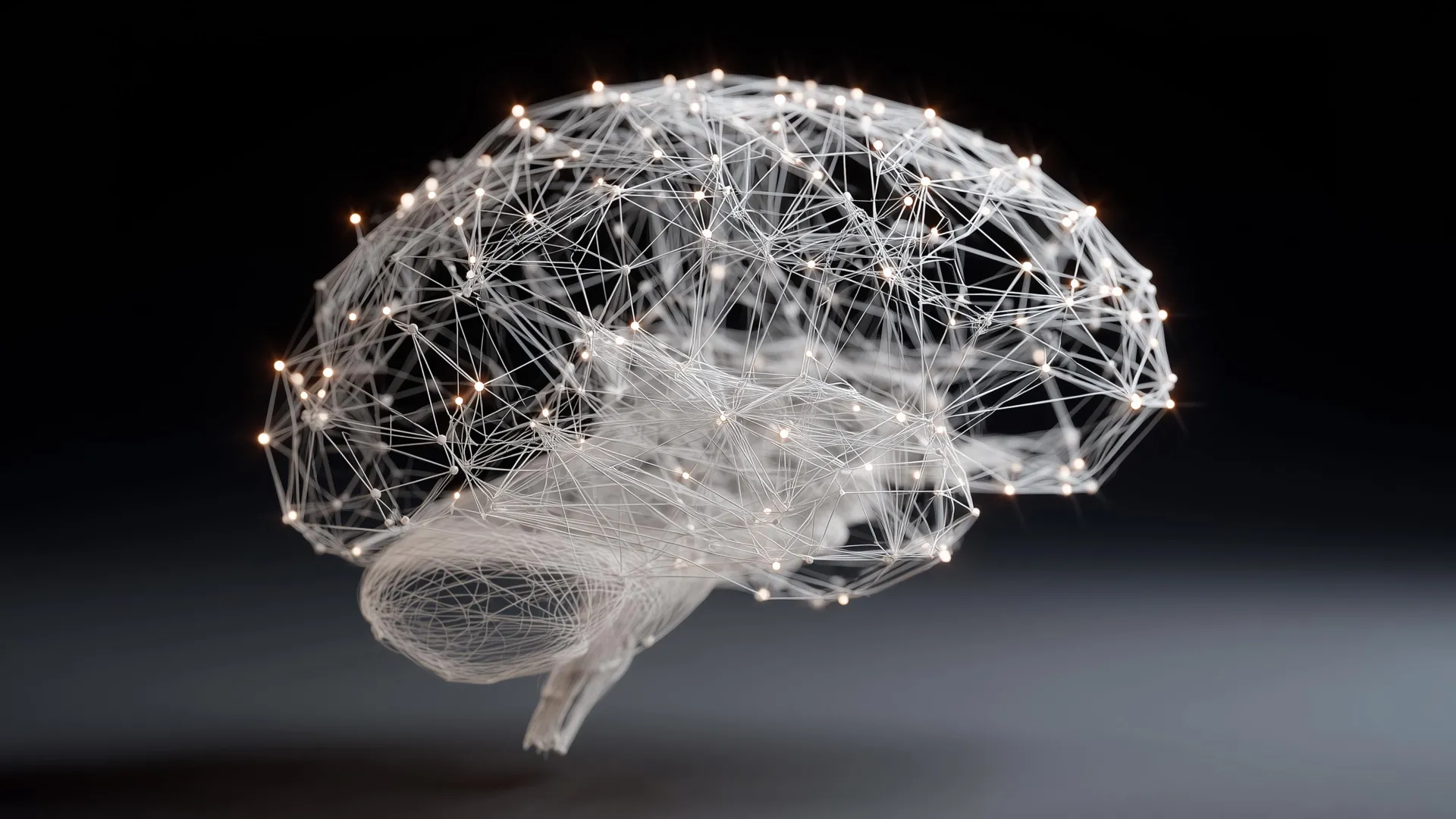
    Researchers at the University of Notre Dame set out to address that question. Using advanced neuroimaging, they examined how the brain is organized overall and how that organization gives rise to intelligence.

    “Neuroscience has been very successful at explaining what particular networks do, but much less successful at explaining how a single, coherent mind emerges from their interaction,” said Aron Barbey, the Andrew J. McKenna Family Professor of Psychology in Notre Dame’s Department of Psychology.

    General Intelligence and Connected Cognitive Abilities

    Psychologists have long observed that skills like attention, memory, perception, and language tend to be linked. People who perform well in one area often perform well in others. This pattern is known as “general intelligence.” It influences how effectively individuals learn, solve problems, and adapt across academic, professional, social, and health settings.

    For more than a century, this pattern has suggested that human cognition is unified at a deep level. What scientists have lacked is a clear explanation for why that unity exists.

    “The problem of intelligence is not one of functional localization,” said Barbey, who also directs the Notre Dame Human Neuroimaging Center and the Decision Neuroscience Laboratory. “Contemporary research often asks where general intelligence originates in the brain — focusing primarily on a specific network of regions within the frontal and parietal cortex. But the more fundamental question is how intelligence emerges from the principles that govern global brain function — how distributed networks communicate and collectively process information.”

    To explore this broader perspective, Barbey and his team, including lead author and Notre Dame graduate student Ramsey Wilcox, tested a framework known as the Network Neuroscience Theory. Their findings were published in Nature Communications.

    The Network Neuroscience Theory Explained

    According to the researchers, general intelligence is not a specific ability or mental strategy. Instead, it reflects a pattern in which many cognitive skills are positively related. They propose that this pattern stems from how efficiently the brain’s networks are structured and how well they work together.

    To evaluate this idea, the team analyzed brain imaging and cognitive performance data from 831 adults in the Human Connectome Project. They also examined an independent group of 145 adults in the INSIGHT Study, funded by the Intelligence Advanced Research Projects Activity’s SHARP program. By combining measures of brain structure and brain function, the researchers created a detailed picture of large-scale brain organization.

    Rather than tying intelligence to a single brain region or function, the Network Neuroscience Theory views it as a property of the brain as a whole. Intelligence, in this framework, depends on how effectively networks coordinate and reorganize themselves to handle different challenges.

    Barbey and Wilcox describe this as a major shift in perspective.

    “We found evidence for system-wide coordination in the brain that is both robust and adaptable,” Wilcox said. “This coordination does not carry out cognition itself, but determines the range of cognitive operations the system can support.”

    “Within this framework, the brain is modeled as a network whose behavior is constrained by global properties such as efficiency, flexibility and integration,” Wilcox said. “These properties are not tied to individual tasks or brain networks, but are characteristics of the system as a whole, shaping every cognitive operation without being reducible to any one of them.”

    “Once the question shifts from where intelligence is to how the system is organized,” Wilcox noted, “the empirical targets change.”

    Intelligence as Whole Brain Coordination

    The findings supported four main predictions of the Network Neuroscience Theory.

    First, intelligence does not reside in a single network. It arises from processing distributed across many networks. The brain must divide tasks among specialized systems and combine their outputs when necessary.

    Second, successful coordination requires strong integration and long-distance communication. Barbey described “a large and complex system of connections that serve as ‘shortcuts’ linking distant brain regions and integrating information across the networks.” These connections allow far apart areas of the brain to exchange information efficiently, supporting unified processing.

    Third, integration depends on regulatory regions that guide how information flows. These hubs help orchestrate activity across networks, selecting the right systems for the job. Whether someone is interpreting subtle clues, learning a new skill, or deciding between careful analysis and quick intuition, these regulatory areas help manage the process.

    Finally, general intelligence depends on balancing local specialization with global integration. The brain performs best when tightly connected local clusters operate efficiently while still maintaining short communication paths to distant regions. This balance supports flexible and effective problem solving.

    Across both groups studied, differences in general intelligence consistently matched these large-scale organizational features. No single brain area or traditional “intelligence network” explained the results.

    “General intelligence becomes visible when cognition is coordinated,” Barbey noted, “when many processes must work together under system-level constraints.”

    Implications for Artificial Intelligence and Brain Development

    The implications extend beyond understanding human intelligence. By focusing on large-scale brain organization, the findings offer insight into why the mind functions as a unified system in the first place.

    This perspective may also explain why intelligence tends to increase during childhood, decline with aging, and be especially vulnerable to widespread brain injury. In each situation, what changes most is large-scale coordination rather than isolated functions.

    The results also contribute to debates about artificial intelligence. If human intelligence depends on system-level organization rather than a single general-purpose mechanism, then building artificial general intelligence may require more than simply scaling up specialized tools.

    “This research can push us into thinking about how to use design characteristics of the human brain to motivate advances in human-centered, biologically inspired artificial intelligence,” Barbey said.

    “Many AI systems can perform specific tasks very well, but they still struggle to apply what they know across different situations.” Barbey said. “Human intelligence is defined by this flexibility — and it reflects the unique organization of the human brain.”

    The research was conducted with co-authors Babak Hemmatian and Lav Varshney of Stony Brook University.


  • Scientists map the nose’s smell receptors in unprecedented detail, offering fresh clues to how olfaction works

    Scientists map the nose’s smell receptors in unprecedented detail, offering fresh clues to how olfaction works

    Smell helps people detect hazards, shapes flavor, and ties closely to memory and emotion, yet its underlying biology has remained harder to map than other senses. New research in mice now outlines a detailed layout of where different smell receptors sit inside the nose.

    The study, published in Cell on April 28, describes the first high-resolution spatial map for more than 1 000 types of olfactory receptors. Researchers say the work challenges the long-held view that these receptor-carrying neurons are arranged largely at random.

    A hidden order in olfaction

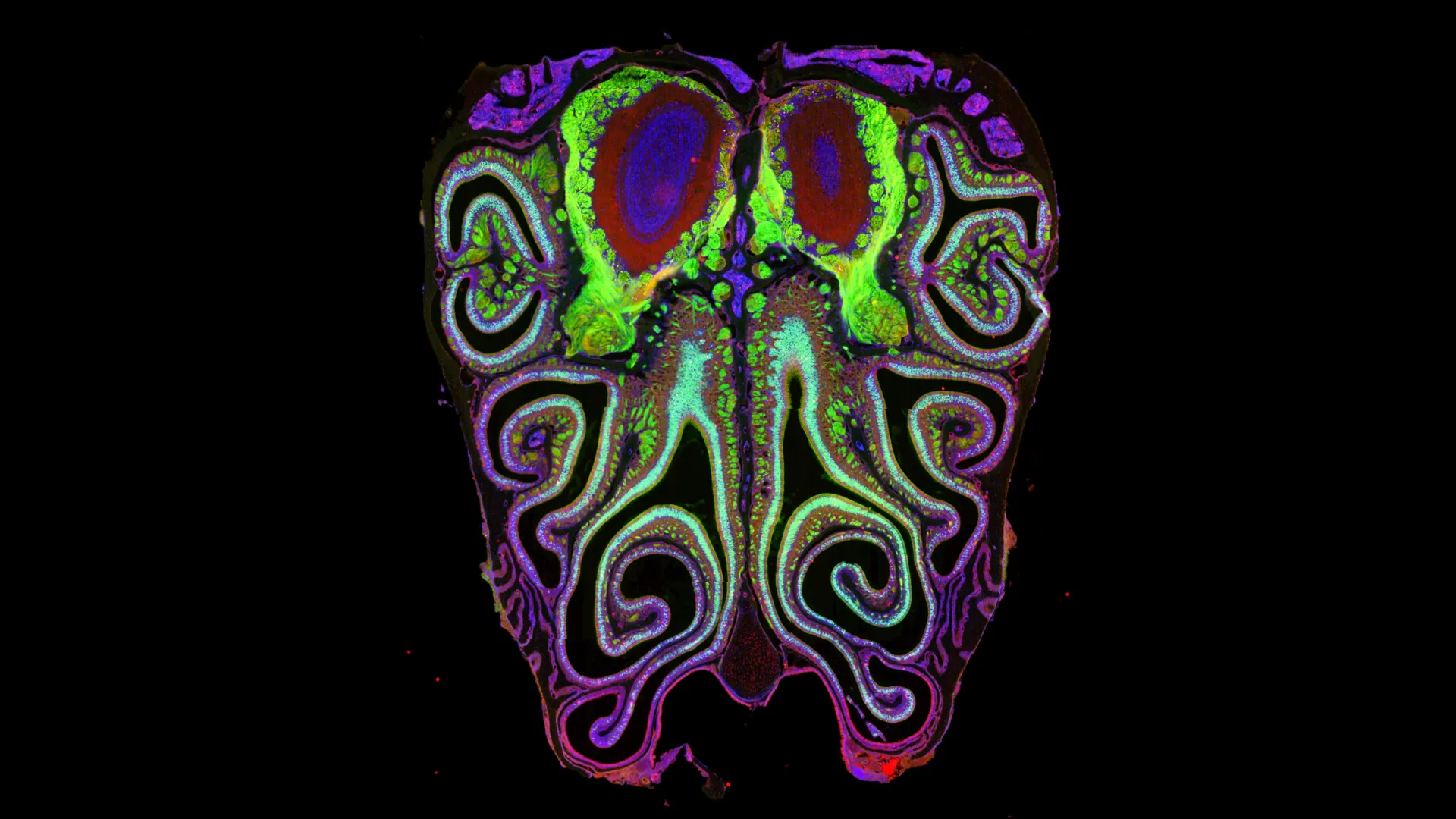
    Instead of a scattered pattern, the team found that olfactory sensory neurons form organized horizontal bands across the nasal tissue. These stripes overlap in a consistent way, grouping neurons by the receptor type they express.

    That organization appeared highly reproducible across animals, suggesting it is a stable biological blueprint rather than a quirk of individual development. The researchers also report that the nasal map aligns with corresponding maps in the olfactory bulb, the brain’s first processing hub for smell.

    How the map may form

    To build the atlas, scientists analyzed about 5.5 million neurons collected from more than 300 mice. They combined single-cell sequencing, which identifies receptor identity, with spatial transcriptomics, which preserves information about each cell’s location.

    The team also points to retinoic acid, a molecule known to regulate gene activity, as a key organizer of the pattern. When researchers altered retinoic acid levels, the position of the receptor stripes shifted up or down, indicating a developmental control signal.

    Why it matters for smell loss

    Loss of smell has gained wider attention in recent years, including from post-viral cases, and it can affect safety, nutrition, and mental well-being. Researchers argue that restoring olfaction will require understanding how receptor neurons are positioned and connected to the brain.

    The study’s authors say a clearer map could help guide future efforts to repair damaged smell circuits, including work on cell-based therapies and other interventions. They also note that an important next step is testing whether a similar receptor organization exists in humans.

  • Why Old Buildings Can Feel Unsettling: Researchers Point to Infrasound and Rising Stress Hormones

    Why Old Buildings Can Feel Unsettling: Researchers Point to Infrasound and Rising Stress Hormones

    That uneasy feeling many people report in older buildings may have a measurable physical trigger, according to new research into infrasound, a type of low-frequency vibration that sits below the threshold of human hearing.

    Scientists say these vibrations can be produced by everyday sources such as ventilation systems, traffic, and industrial machinery, and may be especially common in basements where aging pipes and mechanical equipment can generate persistent low-frequency motion.

    In a controlled experiment published in Frontiers in Behavioral Neuroscience, researchers tested whether people could detect infrasound and whether it affected mood. The team focused on 18 Hz, a frequency below 20 Hz that most people cannot consciously hear.

    The study involved 36 participants who sat alone in a room while listening to either calming or unsettling music. For half of the group, hidden subwoofers also generated infrasound during the session.

    Afterward, participants rated how they felt and whether they believed infrasound had been present, and researchers collected saliva samples to measure cortisol, a hormone associated with the body’s stress response. The key question was whether the body would react even when the sound could not be consciously identified.

    Participants exposed to infrasound showed higher salivary cortisol levels and reported feeling more irritable and less engaged, the researchers found. They were also more likely to describe the music as sad, despite being unable to reliably tell whether infrasound had been playing.

    A hidden factor behind haunted vibes

    Researchers argue the results help explain why some spaces feel disturbing without an obvious cause. In an old building, low-frequency vibrations from ventilation or plumbing may subtly influence mood, increasing tension without providing a clear sensory signal to blame.

    The team noted that expectations can shape how people interpret discomfort, such as attributing agitation to paranormal activity after being told a building is haunted. In that context, infrasound offers a non-supernatural mechanism that still produces real, measurable effects.

    What the study does not prove

    The researchers cautioned that the study was relatively small and tested a single frequency over a short exposure, leaving open questions about how different frequencies, combinations, and longer durations might affect people. Real-world infrasound is rarely a clean tone, and its intensity can vary widely by environment.

    They also emphasized that the biological pathway is not yet clear, even though the hormonal and mood shifts were detectable. Future work is expected to examine a broader range of conditions and to track responses during exposure, not only afterward.

    Why long-term exposure matters

    Cortisol plays a normal role in helping the body respond to challenges, but sustained elevation has been linked in broader medical research to health risks, including effects on sleep, mood, and cardiovascular function. The study adds to concerns that chronic, unnoticed low-frequency noise could contribute to ongoing stress in some settings.

    Researchers say clearer evidence could eventually inform building design choices and noise guidelines, particularly around mechanical systems that generate low-frequency vibrations. For now, they suggest that if a room feels inexplicably tense, the cause may be structural and mechanical rather than mysterious.

  • Study finds early-life stress may raise lifelong gut disorder risk, offering clues for more targeted IBS care

    Study finds early-life stress may raise lifelong gut disorder risk, offering clues for more targeted IBS care

    A new study in Gastroenterology adds to growing evidence that stress and adversity in early life can shape the gut-brain axis for years, raising the odds of chronic digestive problems. Researchers report links between early stress exposure and later symptoms such as abdominal pain and altered bowel habits often seen in irritable bowel syndrome.

    The work, led by scientists at NYU and collaborators, points to biological changes in both the gut and the sympathetic nervous system, a key branch of the body’s stress response. The authors say this may help explain why some people develop long-lasting disorders of gut-brain interaction even when no structural disease is found.

    How stress may rewire gut signals

    In mouse experiments designed to model early-life stress, newborns were separated from their mothers for several hours a day, then assessed months later. As young adults, the animals showed anxiety-like behavior alongside gut pain and motility problems, suggesting persistent effects on brain-gut communication.

    Digging into mechanisms, the team found that different pathways appeared to drive different symptoms. Interfering with sympathetic nerve signaling improved motility issues without easing pain, while serotonin-related signaling was involved in both pain and movement, highlighting why treatments may not work uniformly.

    Large child datasets echo the link

    To test whether the pattern holds in people, the researchers analyzed two large pediatric datasets. In a Danish cohort tracking more than 40 000 children, those born to mothers with untreated depression during or after pregnancy had higher risks of diagnoses including functional constipation, colic, nausea and vomiting, and irritable bowel syndrome.

    A separate analysis of nearly 12 000 children in the US NIH-funded ABCD study found that adverse childhood experiences, such as abuse, neglect, and parental mental health challenges, were associated with more gastrointestinal symptoms at ages nine and 10. Unlike the mouse findings, the human data did not show clear sex differences in digestive outcomes.

    What it could mean for IBS treatment

    The authors argue the results support a more developmental view of digestive disorders, where clinicians consider not only current stress but also early-life exposures that may have shaped gut sensitivity and motility. They also suggest the separation of pain and motility pathways could help guide more personalized approaches to disorders like IBS, where symptoms vary widely.

    Experts caution that observational human data cannot prove causation, and many factors may contribute to digestive symptoms over time, including genetics, infections, diet, and ongoing stress. Still, the study strengthens the case that preventing and treating maternal depression and addressing childhood adversity may have downstream benefits for long-term gastrointestinal health.

  • Coffee and the gut-brain axis: New study finds decaf may lift mood and memory too

    Coffee and the gut-brain axis: New study finds decaf may lift mood and memory too

    Scientists in Ireland have reported new evidence that coffee can influence the gut-brain axis, the two-way signaling system linking digestion and brain function. The research suggests both caffeinated and decaffeinated coffee may shape gut microbes and track with changes in mood-related measures.

    The study, led by APC Microbiome Ireland at University College Cork and published in Nature Communications, compared 31 regular coffee drinkers with 31 non-coffee drinkers. Researchers combined diet records, psychological questionnaires, and stool and urine samples to map links between coffee intake, microbiome activity, and wellbeing.

    A two-week coffee break tested

    Regular coffee drinkers were first asked to stop drinking coffee for two weeks, allowing scientists to observe what changed when coffee was removed. During this abstinence period, the team reported shifts in microbe-related metabolites that helped distinguish habitual coffee drinkers from non-drinkers.

    Coffee was then reintroduced in a way that did not tell participants whether they were receiving caffeinated or decaffeinated coffee. According to the findings, both groups showed improvements across several mood measures, including lower reported stress and depressive symptoms.

    Decaf and caffeine showed differences

    One of the more closely watched results was that improvements in learning and memory were seen in the decaffeinated group. The authors say this points to coffee compounds beyond caffeine, such as polyphenols and other bioactives, as possible drivers of certain brain-related effects.

    Meanwhile, the caffeinated group showed changes consistent with caffeine’s known effects, including better alertness and attention, alongside reduced anxiety in the study’s assessments. The paper also reported differences in biological markers tied to inflammation, though it did not position coffee as a treatment.

    What changed in the microbiome?

    The researchers identified specific bacterial signals associated with coffee drinking, including higher levels of Eggertella species and Cryptobacterium curtum in coffee drinkers. They also noted shifts in broader bacterial groupings that have been linked in other research to metabolic and emotional outcomes.

    Experts caution that microbiome studies often show associations rather than direct cause-and-effect, and larger trials are still needed. Still, the work adds to a growing body of evidence that everyday dietary habits, including coffee consumption, may influence both gut activity and mental health.

    In Europe, moderate caffeine intake is generally considered safe for most healthy adults, with guidance often referenced around 400 mg per day from all sources. People who are pregnant, sensitive to caffeine, or managing anxiety, reflux, or sleep issues are typically advised to discuss intake with a clinician.

  • Printed artificial neurons link up with living brain cells, hinting at smarter brain interfaces

    Printed artificial neurons link up with living brain cells, hinting at smarter brain interfaces

    Engineers at Northwestern University have developed printed artificial neurons that can communicate with living brain cells, a step toward closer integration between electronics and neural tissue. In tests on mouse brain slices, the devices generated electrical spikes that activated biological neurons.

    The work, reported in Nature Nanotechnology, focuses on matching the timing and shape of real neural signals rather than producing simplified pulses. That compatibility matters because neurons respond not just to strength, but to precise patterns that govern how circuits switch on and coordinate.

    How the printed neurons work

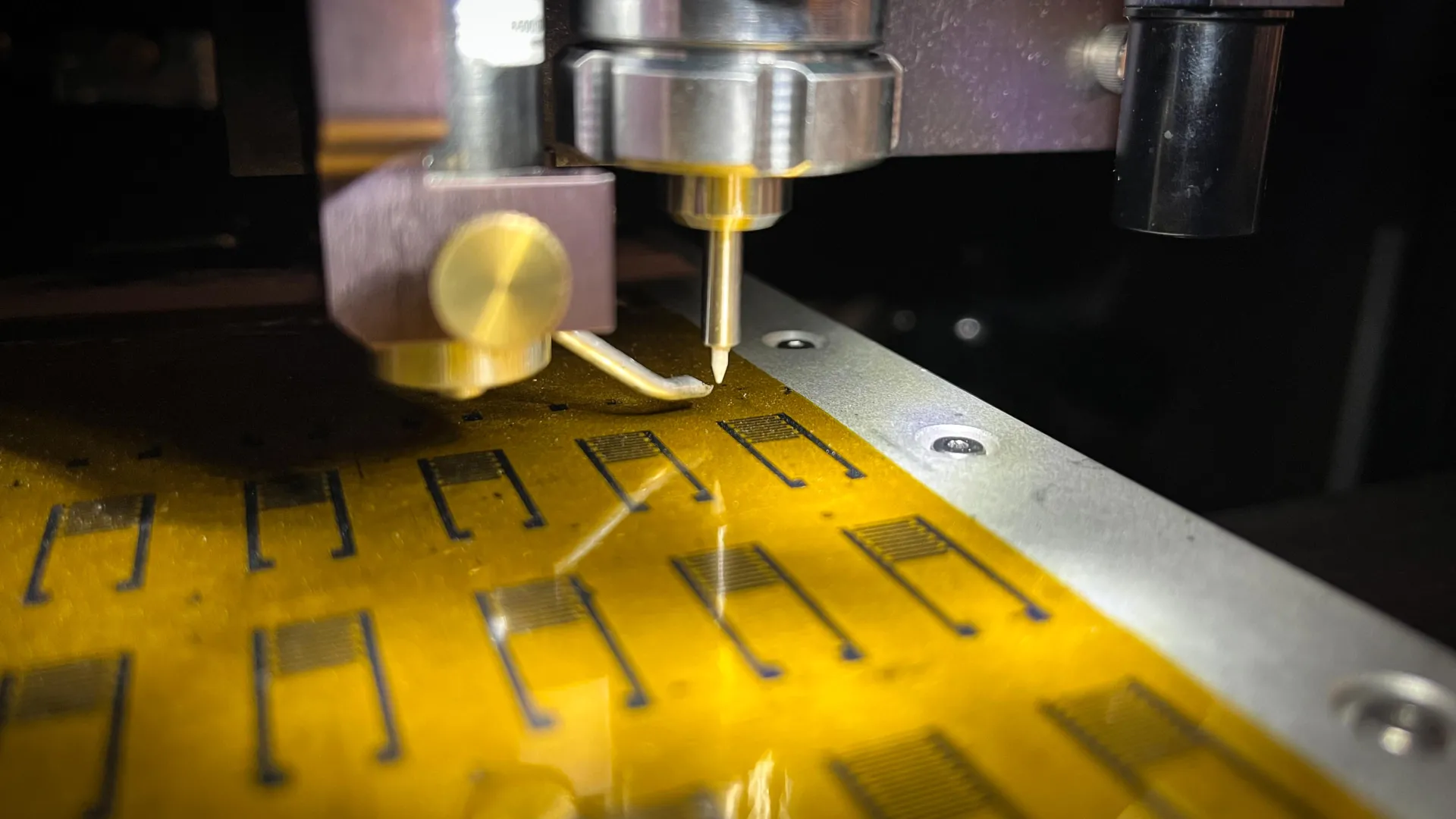
    The team fabricated the devices using aerosol jet printing, depositing electronic inks onto flexible polymer substrates. The inks use nanoscale flakes of molybdenum disulfide as a semiconductor and graphene as a conductor, materials commonly studied for next-generation electronics.

    A key twist is how the polymer is handled after printing. Instead of removing it entirely, researchers partially decomposed it so that electrical current could further reshape the material, creating a narrow conductive filament that produces a neuron-like firing response.

    Why brain timing is hard to mimic

    Many earlier artificial neurons struggled to hit biologically relevant speeds, producing spikes that were either too slow or too fast to reliably engage real tissue. Northwestern’s results suggest the printed devices operate within a temporal window that better aligns with the dynamics of living neurons.

    To test real-world interaction, the researchers delivered the artificial spike patterns to slices of mouse cerebellum in collaboration with neurobiologists. The recorded responses indicated that natural neurons fired in step with the artificial inputs, triggering downstream circuit activity.

    Implications for AI and neuroprosthetics

    The advance could support future brain-machine interfaces and neuroprosthetics that require stable, low-power communication with the nervous system. Flexible, printable electronics are also attractive for implants because they can better match soft tissue compared with rigid silicon components.

    Researchers also point to energy-efficient computing as a longer-term goal, as brain-inspired hardware could reduce power demands compared with conventional digital systems. By generating richer, more neuron-like signals per device, the approach may reduce the number of components needed for complex neuromorphic tasks.

    While the experiments were performed on brain slices rather than in living animals or people, the study offers a clearer demonstration of functional compatibility between artificial neurons and biological circuits. The next hurdles include long-term stability, safe packaging for biological environments, and scaling the technology into larger, controllable networks.

  • Pamirštas pavasario augalas stiprina imunitetą: dėkite į salotas arba gerkite kaip arbatą

    Pamirštas pavasario augalas stiprina imunitetą: dėkite į salotas arba gerkite kaip arbatą

    Czosnaczek, lietuviškai dažnai vadinamas česnakine žliūge arba česnakine rūgtimi, yra dvejų metų augalas iš bastutinių šeimos. Pirmaisiais metais jis suformuoja širdelės formos lapų skrotelę, o antraisiais pražysta smulkiais baltais žiedais.

    Šio augalo atpažinimo ženklas paprastas: patrinti lapai skleidžia aiškų česnako aromatą. Dėl to jis neretai painiojamas su kitais pavasariniais žaliais augalais, tačiau būtent kvapas dažniausiai padeda greitai atskirti.

    Czosnaczek auga laukiniuose plotuose, miškuose, parkuose, krūmynuose ir palei takus, dažnai sudarydamas tankius sąžalynus. Valgomi daugiausia lapai, taip pat tinka ir žiedai, kurie yra švelnesnio, kiek garstyčias primenančio skonio.

    Maistiniu požiūriu tai nėra stebuklingas vaistas, tačiau augalas vertinamas dėl biologiškai aktyvių medžiagų ir antioksidantų. Žalumynuose dažniausiai aptinkami vitaminas C, polifenoliai ir gliukozinolatai, o jie siejami su organizmo apsauga nuo oksidacinio streso.

    Oksidacinis stresas siejamas su lėtiniu uždegimu ir ląstelių senėjimo procesais, todėl mityboje rekomenduojama dažniau rinktis įvairius žalius augalus. Czosnaczek šiuo požiūriu gali būti įdomi alternatyva įprastiems pavasario žalumynams, jei jis vartojamas kaip kasdienės mitybos dalis.

    Virtuvėje šis augalas vertinamas dėl universalumo: žali lapai tinka salotoms, varškei, sumuštinių užtepėlėms, pesto ar kaip švelnesnis česnako prieskonis. Termiškai apdorotas jis gali papildyti sriubas, troškinius ar įdarus, tačiau kaitinant dalis aromato ir jautresnių medžiagų sumažėja.

    Dar vienas populiarus būdas yra užpilas, primenantis lengvą žolelių arbatą. Paprastai lapai užpilami karštu, bet ne verdančiu vandeniu ir palaikomi kelias minutes, kad skonis liktų švelnus ir neperkartėtų.

    Vis dėlto renkant laukinius augalus svarbiausia yra saugumas ir tikslus atpažinimas, ypač jei jie auga prie judrių kelių ar vietose, kur galimas užterštumas. Turint lėtinių ligų, vartojant vaistus ar nėštumo metu, prieš reguliariai įtraukiant naujus žolinius užpilus į racioną verta pasitarti su gydytoju ar vaistininku.

  • Tai ne virškinimas ir ne nugara: 5 ginekologiniai simptomai, kurių moterys neturi ignoruoti

    Tai ne virškinimas ir ne nugara: 5 ginekologiniai simptomai, kurių moterys neturi ignoruoti

    Pilvo pūtimas dažnai siejamas su mityba ar virškinimu, tačiau užsitęsęs, pasikartojantis ar staiga atsiradęs pūtimas gali turėti ir ginekologinių priežasčių. Ypač svarbu suklusti, jei kartu atsiranda greitas sotumo jausmas net suvalgius nedaug.

    Gydytojai pabrėžia, kad tokie simptomai kartais lydi kiaušidžių cistas, endometriozę ar retesniais atvejais onkologines ligas, įskaitant kiaušidžių vėžį. Kiaušidžių vėžiui būdinga tai, kad ankstyvi požymiai gali būti neryškūs ir priminti kasdienius negalavimus.

    Apatinės pilvo dalies skausmas yra dažnas, bet jo pobūdis labai svarbus. Stiprus, nuolatinis ar didėjantis skausmas, nesusijęs su mėnesinėmis, gali rodyti uždegiminius procesus, endometriozę, gimdos miomas ar kiaušidžių problemas.

    Jei skausmas pasireiškia lytinių santykių metu arba jį lydi karščiavimas, pykinimas, bendras silpnumas, delsti nereikėtų. Tokie požymiai gali būti susiję ir su ūmiomis būklėmis, kai reikalingas skubus ištyrimas.

    Kraujavimas ir ciklo pokyčiai

    Bet koks kraujavimas ar tepliojimas ne menstruacijų metu turėtų būti įvertintas gydytojo. Priežasčių spektras platus: nuo hormonų svyravimų ir infekcijų iki gimdos kaklelio ar gimdos gleivinės pakitimų.

    Ypatingo dėmesio reikalauja tepliojimas po lytinių santykių ir kraujavimas po menopauzės. Tokiose situacijose rekomenduojama neatidėlioti ir kuo greičiau atlikti ginekologinę apžiūrą bei papildomus tyrimus.

    Nereguliarios mėnesinės, itin gausios menstruacijos arba ilgai neatsirandančios mėnesinės taip pat yra signalas, kurio nereikėtų ignoruoti. Tai gali būti susiję su policistinių kiaušidžių sindromu, skydliaukės sutrikimais ar kitomis būklėmis, kurias svarbu diagnozuoti laiku.

    Išskyros ir infekcijų rizika

    Pasikeitusi išskyrų spalva, kvapas ar konsistencija dažnai rodo infekciją. Dažniausios priežastys yra bakterinės ar grybelinės infekcijos, taip pat lytiškai plintančios infekcijos, kurios neretai sukelia niežėjimą, deginimą ir diskomfortą.

    Nors dalis infekcijų gydomos gana paprastai, negydomos jos gali sukelti komplikacijų, įskaitant dubens uždegiminę ligą, lėtinį skausmą ar vaisingumo problemas. Dėl to savarankiškas gydymas, neatlikus tyrimų, ne visada yra saugus pasirinkimas.

    Kodėl svarbu reaguoti greitai

    Reikšminga tai, kad nėra visuotinai taikomos patikimos patikros programos kiaušidžių vėžiui nustatyti, todėl dėmesys simptomams ir savalaikės konsultacijos tampa itin svarbios. Pasaulyje kasmet nustatoma daugiau nei 1 000 000 ginekologinių vėžio atvejų, o Lenkijoje apie 12 000 moterų per metus išgirsta ginekologinės onkologinės ligos diagnozę.

    Šie požymiai ne visada reiškia onkologinę ligą, tačiau jie gali būti ir endometriozės signalas. Medicinos literatūroje pabrėžiama, kad endometriozė dažnai siejama su dubens skausmu ir vaisingumo problemomis, o daliai pacienčių simptomai tęsiasi metų metus, kol nustatoma tiksli diagnozė.

    „Jei simptomai trunka ilgiau nei kelias dienas, kartojasi arba akivaizdžiai stiprėja, geriausia nelaukti ir kreiptis į ginekologą“, – pabrėžia gydytojai.

    Reguliarūs profilaktiniai vizitai, dėmesys kūno siunčiamiems signalams ir greita reakcija į naujus ar neįprastus simptomus didina tikimybę laiku nustatyti priežastį. Kuo anksčiau atliekami tyrimai, tuo daugiau gydymo galimybių ir mažesnė komplikacijų rizika.